
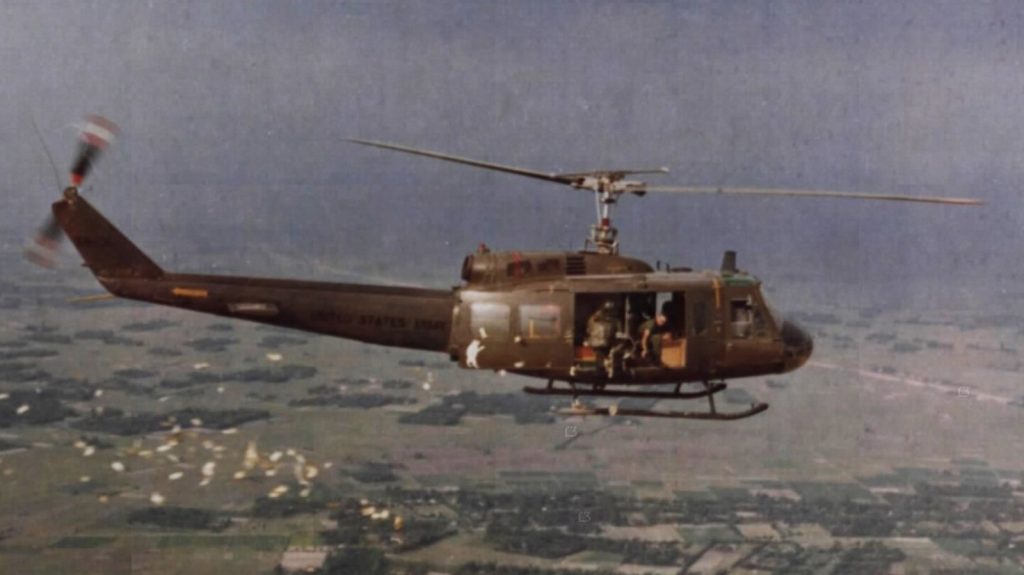
Images of UH-1 Huey helicopters cruising over jungle terrain with open cabin doors remain among the most recognizable visuals of mid-century military aviation. While this configuration appeared extensively in historical footage and war cinema, keeping the side doors locked open was a practical tactical decision shaped by intense battlefield realities.
Direct Summary: During the Vietnam War, the UH-1 Huey operated with open cabin doors to enable rapid troop insertion, accommodate door gunner weapons, and improve crew situational awareness. Originally designed as a utility transport rather than an armed assault craft, the helicopter required open doors and stripped interiors to minimize vulnerable ground time in active drop zones.
| Operational Factor | Tactical Purpose | Impact on Mission Success |
|---|---|---|
| Rapid Egress & Ingress | Allows troops to jump clear immediately upon touchdown | Reduces helicopter exposure time to enemy ground fire |
| Gunner Clearance | Provides full field of fire for mounted machine guns | Delivers immediate defensive suppressive fire during landing |
| Space Management | Compensates for removed cabin seating inside the transport | Maximizes floor space for armed infantry and gear |
| Environmental Control | Vents extreme heat and engine fumes from the cabin | Prevents heat exhaustion among soldiers prior to deployment |
Utility Design Meets Combat Reality
The UH-1 Iroquois was designated by the U.S. Military as a utility helicopter, intended primarily for medical evacuation, general transport, and command support. Because it was not initially built as an armed troop transport, the aircraft lacked built-in combat firing ports or dedicated gunner stations. When combat conditions demanded defensive firepower, crews mounted heavy machine guns directly inside the main cabin doors.
These weapon mounts and ammunition boxes occupied considerable cabin floor space. Standard sliding doors became a physical hindrance when operating the bulky machine guns. Leaving the doors locked back or removing non-essential interior hardware gave door gunners unobstructed fields of fire to protect the aircraft during vulnerable takeoff and landing phases.
Minimizing Exposure in Hot Landing Zones
In combat operations across Vietnam, landing zones were frequently contested by ground forces. A stationary or slow-moving helicopter hovering near the ground presented an ideal target for enemy small-arms fire and rocket-propelled grenades. Every extra second spent on the ground drastically elevated the risk of destruction.
To speed up disembarkation, ground troops frequently rode with their legs dangling over the edge of the open doorway. This position allowed soldiers to leap out the moment the skids touched down, or even while the helicopter held a low hover. Stripping out the interior seats and locking the doors back ensured an unhindered egress route, shaving vital seconds off each mission.
Altitude Exceptions and High-Altitude Flights
While open-door flight served as standard operating procedure for low-altitude troop transport and combat assault missions, it was not universal. Pilots would close the sliding doors during high-altitude transit flights or long-distance repositioning maneuvers. At several thousand feet above sea level, air temperatures dropped significantly, making closed doors necessary to protect crew members and passengers from sub-freezing wind chill.
Frequently Asked Questions
Were Huey helicopter doors removed entirely or just locked open?
While doors were sometimes removed in the field, they were usually slid fully back and locked into place. This gave the flight crew the flexibility to close them during high-altitude flights or inclement weather while keeping them wide open during combat operations.
Why did troops ride with their legs hanging out of the Huey?
Sitting on the cabin floor with legs dangling outside allowed soldiers to clear the aircraft instantaneously upon arrival. This minimized the time the helicopter needed to remain stationary in hazardous landing zones exposed to enemy fire.
What primary weapons were used by Huey door gunners?
Door gunners primarily operated M60 7.62mm machine guns mounted on flexible swivels. These weapons provided immediate suppressive fire to keep enemy troops pinned down while infantry boarded or exited the aircraft.