
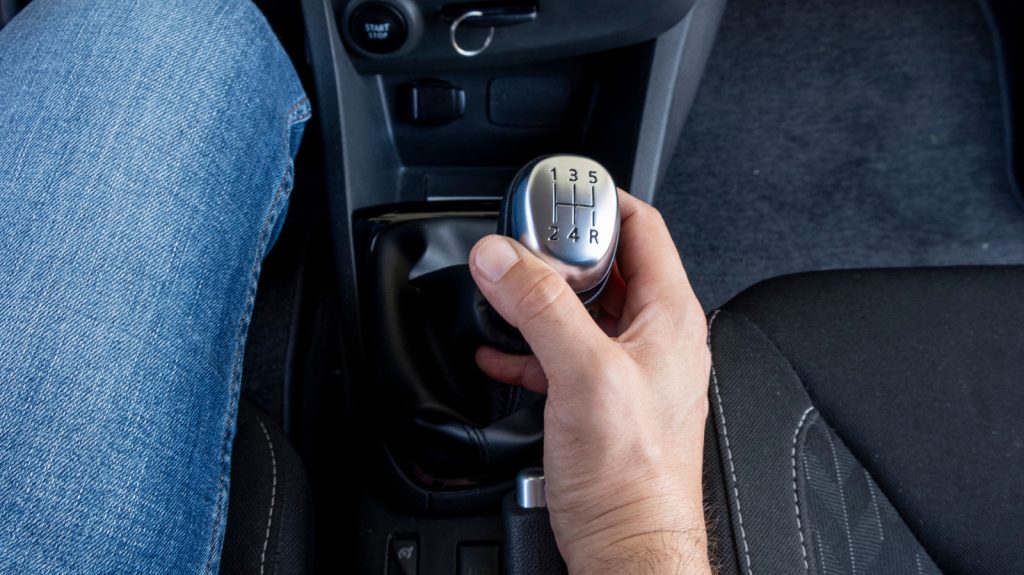
Car purists often argue that manual transmissions offer superior mechanical feedback, but modern performance testing paints a clear picture regarding straight-line speed. When comparing raw acceleration from a standstill, automatic gearboxes consistently outpace traditional stick shifts on both the street and the track.
Modern automatic transmissions accelerate faster than manual cars due to rapid electronic shifting, unbroken power delivery, and the elimination of human error. While manual vehicles require drivers to disengage the clutch and lift off the accelerator, computer-controlled automatics execute gear changes in milliseconds, maintaining peak engine torque without losing vital momentum.
Why Automatics Excel in Straight-Line Speed
The speed advantage of modern automatics comes down to physics and energy transfer. Drivers operating an automatic gearbox simply press the accelerator, allowing electronic control units to manage shift points instantly. Because the powertrain maintains continuous energy flow to the driven wheels, the vehicle launches forward without momentum gaps.
In contrast, driving a manual car introduces physical delays and operational variables. To change gears, a driver must release the throttle, depress the clutch pedal, select the next gear, and re-engage the clutch. Even seasoned drivers experience a slight interruption in power delivery during this mechanical sequence.
Driver error also plays a major role in acceleration discrepancies. Shifting a manual car too early causes engine revolutions per minute (RPM) to drop below the optimal powerband, resulting in sluggish pickup. Conversely, missing a gear or misjudging engine torque completely disrupts momentum, giving automatic transmissions a decisive edge.
Automatic vs. Manual Transmission Comparison
| Transmission Type | Shift Execution Speed | Power Delivery | Primary Advantage |
|---|---|---|---|
| Automatic | Milliseconds (Computer-Controlled) | Continuous / Unbroken | Maximum acceleration and consistent launch times |
| Manual | Hundreds of Milliseconds (Human-Operated) | Intermittent (Throttle Lift Required) | Greater driver engagement and total vehicle control |
| Semi-Automatic (F1 Paddle) | Instantaneous (ECU & Actuators) | Direct and Seamless | Precision track management without clutch pedals |
The World’s Fastest Manual Hypercar
Although automatic transmissions dominate sprint records, hypercar manufacturers occasionally build high-powered stick shifts for enthusiast demand. The Hennessey Venom F5-M Roadster holds the title of the most powerful manual hypercar ever produced. Powered by a twin-turbocharged Fury V8 engine generating 2,031 horsepower, the vehicle hits 60 mph in 3.3 seconds and achieves a top speed of 285.6 mph.
Designed to offer raw driver interaction alongside extreme performance, Hennessey limited the F5-M Roadster production run to just 12 units, priced at $2.65 million each. Meanwhile, the automatic Hennessey Venom F5 Evolution pushes performance even further, pairing the same 2,031-horsepower V8 with massive mirror-image turbochargers to produce 1,445 lb-ft of torque.
What Gearboxes Are Used in Professional Motorsport?
Different racing disciplines select transmission designs based on specific operational demands:
- Drag Racing: Prefers automatic transmissions because seamless torque transfer yields the fastest quarter-mile times.
- Autocross & Track Racing: Benefits from manual transmissions, giving drivers precise control over engine braking and gear selection through tight corners.
- Formula 1: Utilizes highly sophisticated semi-automatic paddle-shift systems.
Formula 1 transitioned away from traditional manual gearboxes following a major engineering shift in 1989. Modern F1 steering wheels feature paddle levers that actuate internal dog rings and straight-cut gears via an Engine Control Unit. This allows F1 drivers to execute over 3,500 lightning-fast gear changes during a single Grand Prix without taking their hands off the wheel.
Frequently Asked Questions
Why do automatic cars accelerate faster than manual cars?
Automatic cars accelerate faster because electronic systems execute gear changes in milliseconds without requiring the driver to lift off the gas pedal. This continuous power transfer eliminates torque loss and reduces human shift delays.
Do modern Formula 1 cars use manual transmissions?
No, Formula 1 cars use semi-automatic paddle-shift transmissions controlled by an Engine Control Unit. Drivers trigger gear shifts using steering wheel paddles without operating a physical clutch pedal during racing conditions.
Is a manual car ever better than an automatic?
While automatics win on pure acceleration, manual cars are often preferred for track driving, autocross, and enthusiast use. Manual gearboxes afford complete control over engine RPM, torque delivery, and corner balancing.