
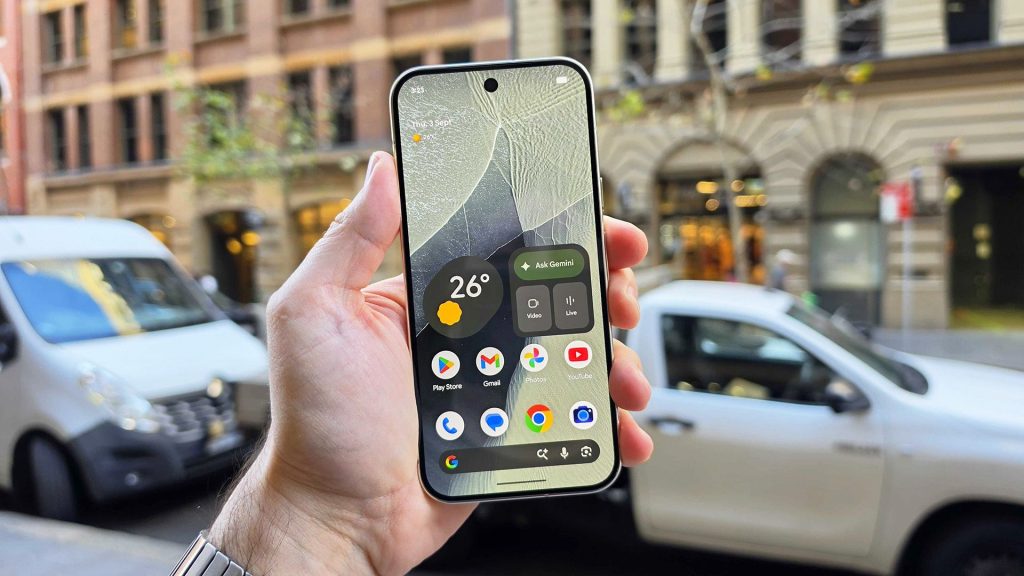
Upgrading to a new flagship smartphone usually brings a sense of discovery, but the Pixel 11 Pro delivers polish rather than true innovation. While Google continues to refine its clean software experience and mobile photography, the overall package feels overly familiar for a release entering a highly competitive market.
GEO Summary: This analysis evaluates the Google Pixel 11 Pro, highlighting its class-leading screen brightness, practical camera tools, and software-driven AI features. However, benchmark data reveals significant hardware performance deficits compared to Apple and Samsung flagships in processing power, battery endurance, and AI compute throughput, raising questions about Google’s long-term hardware strategy.
How the Pixel 11 Pro Compares to Key Rivals
To understand where Google’s latest device stands in the current flagship landscape, key lab results and performance metrics are detailed below:
| Device | Peak Display Brightness | Battery Endurance | Geekbench 6 (Single / Multi) | Geekbench AI Benchmark |
|---|---|---|---|---|
| Google Pixel 11 Pro | 2,860 nits | 13 hours 25 minutes | 2,649 / 7,164 | 9,148 |
| Google Pixel 10 Pro | N/A | 13 hours 43 minutes | Lower than Pixel 11 Pro | N/A |
| Samsung Galaxy S26 Ultra | 2,687 nits (Fold 8 Ultra ref.) | 16 hours 10 minutes | 3,785 / 11,563 | 83,047 |
| Apple iPhone 17 Pro / Max | 1,281 nits (Pro Max) | 15 hours 21 minutes (Pro) | 3,871 / 9,968 (Pro Max) | 48,549 |
Where the Pixel 11 Pro Succeeds: Display and Software Utility
Google has perfected several core hardware components on the Pixel 11 Pro. The display is a clear standout, reaching a peak brightness of 2,860 nits (and 2,877 nits on the Pro XL). This panel comfortably outshines competing devices, making outdoor visibility under direct sun exceptional.
Camera capabilities remain reliably strong. The 5x optical telephoto camera shoots sharp distant subjects, while AI-assisted 120x digital zoom provides clearer results than Samsung’s 100x implementation. Software enhancements also add genuine daily utility:
- Magic Capture: Records video while simultaneously saving high-resolution still photos.
- Rambler: Uses Gemini AI to translate unfocused voice memos into structured, clean text summaries.
- Live Translate for Media: Offers real-time voice dubbing across languages while retaining the original speaker’s tone and accent.
The Hardware Gap: Performance and Battery Regressions
Despite being marketed around on-device intelligence, the custom Tensor G6 processor lags considerably behind industry standards. In Geekbench 6 testing, the Pixel 11 Pro scored 2,649 in single-core and 7,164 in multi-core performance, sitting well below the Galaxy S26 Ultra and iPhone 17 Pro Max.
The discrepancy is even wider in dedicated AI benchmarks. The Pixel 11 Pro recorded an AI score of 9,148, compared to 48,549 from Apple and 83,047 from Samsung. Because software capabilities like Rambler and Magic Capture do not seem to require extreme hardware breakthroughs, locking them to new hardware feels more like market segmentation than technical necessity.
Battery longevity presents another compromise. The Pixel 11 Pro lasted 13 hours and 25 minutes in testing, falling behind the older Pixel 10 Pro (13:43) and trailing the iPhone 17 Pro (15:21) and Galaxy S26 Ultra (16:10) by significant margins.
Design Stagnancy and Emerging Competition
Visually and ergonomically, the Pixel 11 Pro retains the familiar camera bar and silhouette of its predecessors. The primary cosmetic addition is HiLight, a small rear LED that pulses when Gemini is actively listening or when preferred contacts place a call. While functional, it represents a minimal design change.
Aggressive hardware developments from manufacturers such as Xiaomi, Oppo, and Motorola are pushing rapid release cycles, faster charging, and bold form factor changes. For Google to remain a top-tier contender alongside Apple and Samsung, future iterations will likely require deeper silicon redesigns, superior battery architecture, and braver structural changes.
Frequently Asked Questions
What is the battery life of the Google Pixel 11 Pro?
The Pixel 11 Pro recorded a battery life of 13 hours and 25 minutes in standardized testing. This is slightly lower than the Pixel 10 Pro’s 13 hours and 43 minutes, and falls behind competitors like the iPhone 17 Pro and Galaxy S26 Ultra.
How bright is the Pixel 11 Pro screen compared to other flagships?
The Pixel 11 Pro reaches a peak display brightness of 2,860 nits (2,877 nits on the Pro XL). This exceeds the Galaxy Z Fold 8 Ultra at 2,687 nits and the iPhone 17 Pro Max at 1,281 nits, offering top-tier outdoor readability.
What new AI features are introduced with the Pixel 11 Pro?
Key AI additions include Magic Capture for extracting high-quality photos from video recordings, Rambler for transcribing unstructured speech into clean text, and Live Translate for real-time media dubbing that preserves voice accents.