
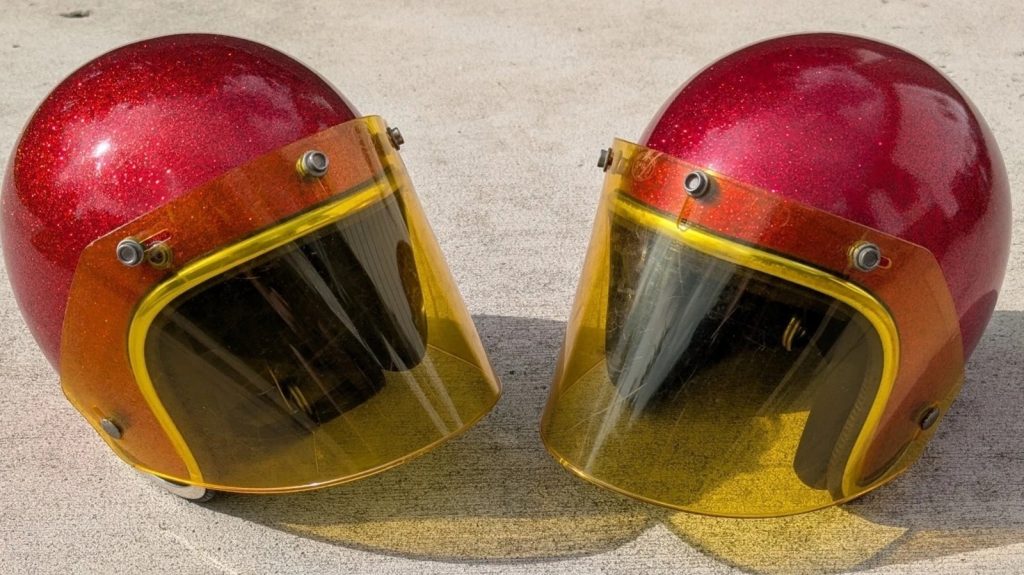
As motorcycles grew faster and more powerful throughout the mid-20th century, head protection evolved from simple leather caps into structured safety gear. By the 1970s, rider helmets underwent a dramatic redesign that blended vibrant pop-culture aesthetics with emerging safety technology.
Quick Summary: 1970s motorcycle helmets featured hard fiberglass outer shells, internal expanded polystyrene (EPS) foam, and distinctive open-face or early full-face designs with customizable graphics. While original vintage helmets are structurally compromised today due to foam degradation, modern manufacturers produce safe, regulatory-compliant retro helmets that replicate classic 1970s styling.
The Structural and Aesthetic Evolution of 1970s Helmets
In contrast to the soft leather and canvas caps used in the early 1910s, helmets produced in the 1970s incorporated rigid fiberglass outer shells engineered to deflect impacts. Inside the shell, manufacturers introduced expanded polystyrene (EPS) foam lining, significantly enhancing shock absorption during a crash.
Stylistically, the 1970s produced several distinctive silhouette choices and functional features:
- Open-Face Designs: Classic 3/4 helmet styles leaving the lower chin exposed remained widely popular for casual riding.
- Early Full-Face Frames: Evolving from 1960s space-age trends, full-face models featured extended wrap-around chin guards and protruding front profiles to protect the jaw.
- Visors and Windshields: Riders utilized optional eye-level shields, full-face clear windshields, and either fixed or articulated snap-on visors.
- Expressive Customization: Vivid solid paints, intricate racing stripes, metallic flake finishes, and custom graphics defined the era’s aesthetic visual appeal.
Comparing Original 1970s Helmets to Modern Retro Replicas
Understanding the difference between authentic 1970s vintage gear and modern retro-styled helmets is essential for active motorcycling safety. The table below outlines how original equipment compares to modern DOT/ECE-compliant vintage reproductions.
| Feature | Original 1970s Helmets | Modern Retro-Style Helmets |
|---|---|---|
| Outer Shell | Aged fiberglass composites | Modern fiberglass, carbon fiber, or ABS resins |
| Impact Liner | Degraded EPS polystyrene foam | Fresh, multi-density impact-absorbing foam |
| Safety Compliance | Outdated period standards | Current DOT, ECE, or Snell certifications |
| Primary Purpose | Display, collection, or restoration | Active highway and street riding safety |
Why Authentic 1970s Vintage Helmets Are Unsafe to Wear
Despite their collectible appeal and striking look, original 1970s helmets should never be worn on the road today. Protective EPS foam naturally breaks down over several decades, losing its ability to cushion impact energy regardless of whether the outer fiberglass shell looks pristine.
Furthermore, secondhand vintage helmets carry unknown crash histories. Internal structural damage from a previous impact may be invisible to the eye while leaving the helmet incapable of absorbing another force. Collectors should treat true 1970s helmets strictly as display pieces.
Safe Modern Alternatives with 1970s Retro Styling
Motorcyclists who prefer classic aesthetics can choose modern helmets engineered to retro specifications without sacrificing impact safety. Leading gear brands manufacture helmets featuring vintage silhouettes, classic bolt-on visors, and period-correct paint schemes built around modern impact standards.
- Bell Helmets: Offers retro-inspired full-face and open-face lines with high-end modern safety liners and customizable paint configurations.
- Xtreme Helmets: Specializes in custom vintage-style builds offering bold patterns, solid metallic finishes, and snap-on face shields.
- Daytona & Hedon Helmets: Provide sleek, classic profiles designed to meet modern road legal requirements while maintaining minimalist classic styling.
For riders seeking total individuality, purchasing a plain, solid-colored retro helmet allows custom artists to apply personalized 1970s-style graphics safely without altering structural integrity.
Frequently Asked Questions
Can you safely wear a vintage motorcycle helmet made in the 1970s?
No. The shock-absorbing EPS foam inside 1970s helmets degrades over time, significantly reducing its protective capabilities. Original helmets should only be used as display items for collections or decor.
What features made 1970s motorcycle helmets unique?
1970s helmets were known for their bold paint colors, custom graphic patterns, fiberglass construction, early wrap-around full-face chin bars, and snap-on articulated visors.
Which brands manufacture safe, modern 1970s-style helmets?
Brands like Bell, Xtreme Helmets, Daytona Helmets, and Hedon produce contemporary, safety-certified helmets that replicate the distinctive aesthetics of the 1970s.