
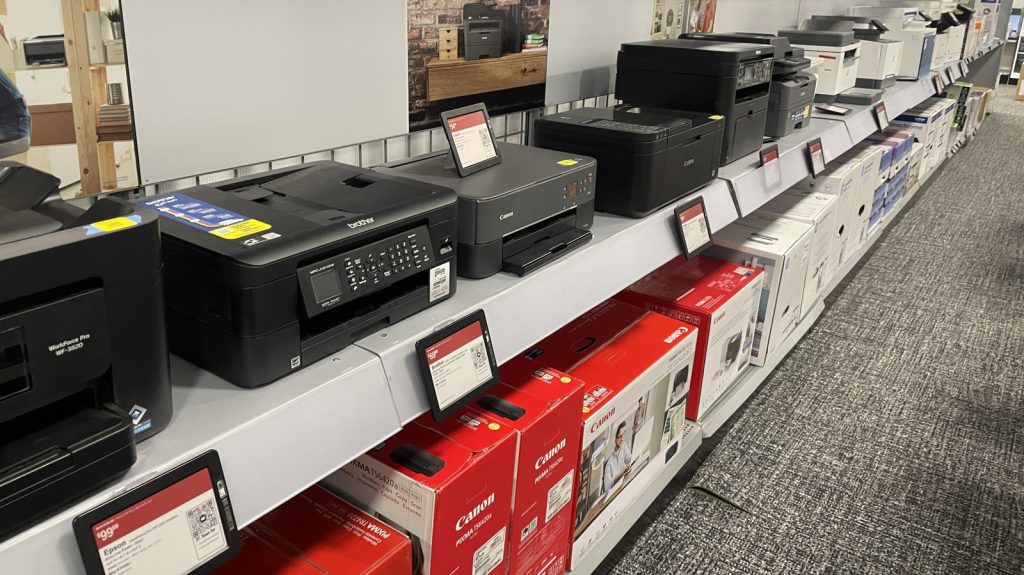
Staring at a bargain-priced inkjet printer on a store shelf feels like an obvious win for occasional home printing. However, the upfront sticker price rarely reflects the true financial commitment required to keep that budget machine operational over time.
This guide analyzes the hidden long-term expenses and hardware reliability issues associated with budget inkjet printers compared to tank-style inkjets and laser printers. Based on consumer testing data, it explains how ink maintenance, page costs, and mechanical design impact total cost of ownership, helping casual and frequent users choose the right printing technology.
The Hidden Ongoing Expenses of Low-Cost Inkjets
The primary trap of an inexpensive inkjet printer lies in the ongoing expense of replacement cartridges. Testing from Consumer Reports indicates that maintaining a budget inkjet printer can easily require $70 or more in replacement ink every year. Over a short period, ink cartridges quickly surpass the original purchase price of the machine itself.
Compounding this problem is how inkjet printers manage liquid ink. A notable portion of your paid cartridge volume never actually hits the page. Instead, these devices consume ink during automated, periodic maintenance cycles designed to prevent delicate printhead nozzles from clogging.
By contrast, tank-style inkjet printers require a larger initial investment—typically $250 or more—but cost significantly less to run over time. Because refill bottles carry far lower markup than proprietary tiny cartridges, tank printer owners spend only about $10 per year on ink under similar usage patterns.
Comparing Printer Technologies: Cost and Performance
Understanding the balance between initial price, running expenses, and output capabilities helps prevent buyer’s remorse. The table below outlines how standard budget inkjets compare against high-capacity tank models and laser printers.
| Printer Type | Initial Purchase Price | Estimated Annual Supply Cost | Primary Output Strengths | Core Drawback |
|---|---|---|---|---|
| Budget Inkjet | Low (Under $100) | $70+ per year | Vibrant colors, smooth photo gradients | High cartridge cost, ink wasted during cleaning |
| Tank-Style Inkjet | Moderate ($250+) | ~$10 per year | Low cost per page, excellent photo quality | Higher upfront equipment expense |
| Laser Printer | Moderate to High | Low (Long-lasting toner) | Fast print speeds, razor-sharp text | Inferior photo rendering compared to inkjets |
Mechanical Complexity and Hardware Reliability
Beyond ink expenses, the physical architecture of an inkjet printer creates additional long-term risk. Inkjets rely on intricate internal systems, including precision motors, gears, drive belts, moving printhead assemblies, and delicate paper feeds. Every moving part represents an additional potential point of hardware failure.
Because of these mechanical vulnerabilities, Consumer Reports member survey data consistently reveals lower owner-satisfaction and reliability scores for inkjet models when compared to laser alternatives. Minor component failures often force consumers to replace the entire unit prematurely.
Laser vs. Inkjet: Matching Machinery to Your Needs
For household document printing, laser printers present a compelling alternative. Although laser hardware generally costs more initially, the long-term price per page remains low due to toner efficiency. Toner uses dry powder rather than liquid ink, meaning it will not dry out or clog print nozzles during extended idle periods between uses.
Product evaluation by Popular Mechanics confirms distinct performance advantages between printer classes. Laser models deliver faster printing speeds and produce noticeably crisper, sharper text, making them optimal for text-heavy reports and office documents. Conversely, inkjets retain a clear advantage in color accuracy and photo printing, yielding richer hues and seamless color transitions that lasers cannot match.
Before purchasing, buyers should look beyond initial discounts and evaluate personal usage patterns. Checking independent customer reviews, calculating ongoing consumable costs, and assessing required feature sets ensures a practical, cost-effective investment.
Frequently Asked Questions
Why do cheap inkjet printers waste ink even when not printing documents?
Inkjet printers run automatic maintenance and cleaning cycles to force liquid ink through the printhead nozzles. This process prevents drying and clogging, but it consumes valuable ink that never appears on printed pages.
Are laser printers suitable for occasional home document printing?
Yes, laser printers are ideal for intermittent use because toner powder does not dry out over time. Unlike liquid inkjet cartridges, a laser toner cartridge can sit unused for months without losing functionality or clogging internal parts.
Is a tank-style inkjet printer worth the higher upfront cost?
A tank-style inkjet printer is worth the higher initial price if you print regularly or require high-quality color prints. The initial hardware cost is offset quickly by inexpensive ink refills, dropping annual supply costs from around $70 down to roughly $10.