
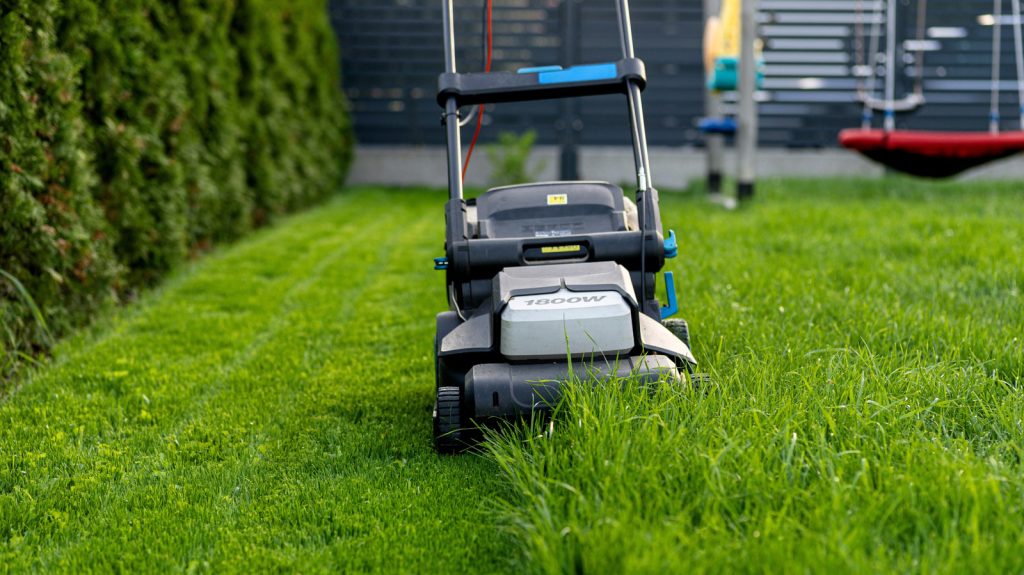
Switching to an electric lawn mower promises quiet operation and hassle-free starts, but reliance on battery power introduces distinct operational tradeoffs. Before replacing proven gas equipment, homeowners must evaluate whether current electric technology can reliably handle their yard size and grass conditions.
Direct Overview: This analysis examines the five primary drawbacks of electric lawn mowers, focusing on limited runtime, reduced torque output, battery thermal sensitivity, high long-term battery replacement costs, and corded range restrictions. It provides essential practical context for homeowners and property managers weighing battery-powered convenience against heavy-duty mowing demands.
Electric vs. Gas Lawn Mower Comparison
| Performance Metric | Electric Mowers | Gas Mowers |
|---|---|---|
| Average Torque Output | 2.5 to 3.0 lb-ft (Standard models) | 4.0 to 8.0 lb-ft |
| Continuous Runtime | 30 to 60 minutes per charge | Unlimited (Instant refueling) |
| Battery/Engine Maintenance Cost | $250 to $1,500 replacement every 3–5 years | Low yearly oil/spark plug service |
| Overgrown & Wet Grass Performance | Prone to bogging down or stalling | High cutting capacity under strain |
| Weather Sensitivity | Batteries degrade in extreme heat or cold | Operates across standard ambient temperatures |
Limited Runtime Constraints for Large Lawns
Most standard battery-powered mowers deliver between 30 and 60 minutes of continuous runtime on a single charge. While this is sufficient for properties measuring a quarter to half an acre, larger yards demand extended cutting time that single batteries cannot provide.
Recharging a depleted mower battery mid-job introduces significant downtime, delaying yard maintenance. Purchasing spare battery packs extends cutting time but adds substantial cost to the initial investment. Uneven terrain, thick weeds, and steep inclines draw more power, further reducing overall operating range.
Reduced Torque and Lower Power Output
Although motor technology has advanced, standard battery-operated mowers generally deliver lower torque output than traditional gas engines. A typical battery mower generates around 2.5 to 3 lb-ft of torque, whereas gas engines regularly produce 4 to 8 lb-ft.
This power differential becomes noticeable when managing dense, overgrown, or wet turf. Lower torque causes blades to drag, resulting in uneven cuts or stalled motors on thick grass or hilly ground. High-torque electric mowers are available on the market, but they command premium prices.
Vulnerability to Extreme Weather and Wet Conditions
Extreme temperatures pose a significant operational challenge for lithium-ion and sealed lead-acid (SLA) batteries. High heat accelerates thermal degradation during use and charging, while freezing cold reduces active charge capacity and overall power delivery.
SLA batteries require consistent maintenance, including full-charge storage during offseason months to prevent permanent failure. Additionally, mowing damp lawns or operating during light rain presents electrical hazard risks. Moisture burdens the electric motor, increases rust risks, and endangers internal circuitry.
Expensive Battery Replacement Costs
Even with proper storage and charging habits, electric lawn mower batteries have a finite service life of three to five years. Once cell capacity declines, replacing the power pack becomes mandatory to restore usable runtime.
Battery replacement costs range from $250 to $300 for basic residential units and upwards of $1,000 to $1,500 for commercial-grade platforms. Buyers often focus on low initial routine maintenance while failing to budget for periodic high-cost battery replacements.
Inconveniences of Corded Electric Models
Corded electric mowers eliminate battery management and run infinitely, but their physical mobility is strictly limited by cord length and outdoor outlet locations. They are impractical for medium to large yards without multiple exterior power sources.
Managing a long extension cord requires constant vigilance to avoid running over the cable or snagging it on trees, shrubs, and hardscaping elements. Damaged cords create electrical safety hazards, making corded units suitable primarily for small, open suburban yards.
Frequently Asked Questions
How long do electric lawn mower batteries usually last?
Electric lawn mower batteries typically last between three and five years under optimal maintenance conditions. After this period, active cell capacity degrades noticeably, necessitating a replacement pack that costs between $250 and $1,500 depending on voltage and battery capacity.
Can electric mowers effectively cut tall or dense grass?
Standard electric mowers can struggle with tall or dense grass because they produce lower average torque (2.5 to 3 lb-ft) than gas engines (4 to 8 lb-ft). Heavy growth increases motor resistance, which reduces blade speeds and causes the mower to stall or consume battery power rapidly.
Is it safe to use an electric lawn mower on wet grass?
Operating an electric lawn mower on wet grass is unsafe and inadvisable. Moisture poses potential shock hazards, particularly with corded models, and damp grass clippings clog the deck, overworking the electrical motor and straining the battery.