
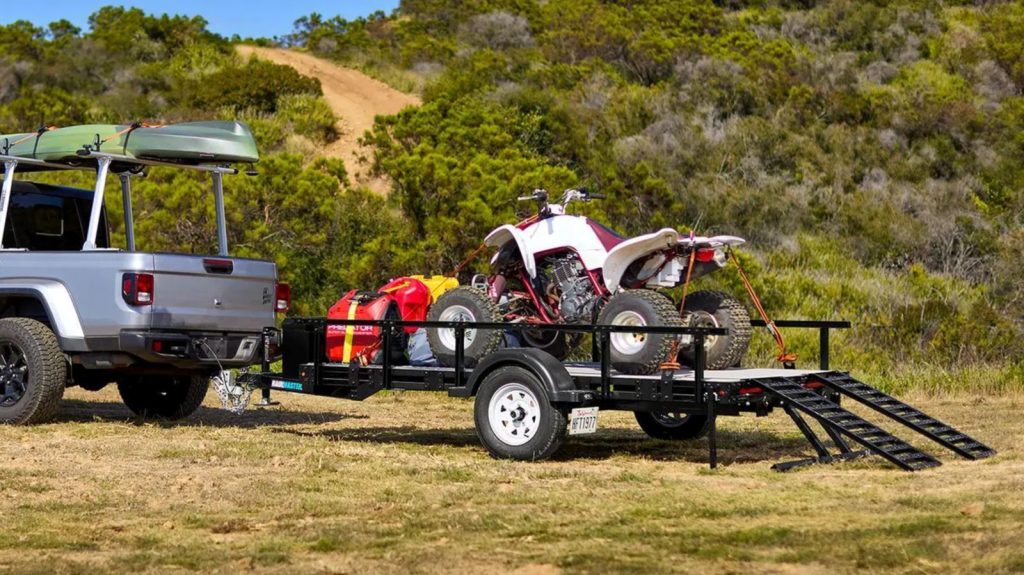
Harbor Freight utility trailers offer budget-friendly entry points for hauling, but stock configurations often lack the dedicated features needed for specialized jobs. Customizing these trailers allows DIYers to address factory limitations and tailor the platform to specific towing needs.
This guide outlines five practical modifications for Harbor Freight trailers, ranging from simple tie-down additions to full micro camper conversions. These user-tested upgrades improve cargo security, storage convenience, and towing safety for haulers, campers, and outdoor enthusiasts seeking to maximize their budget utility trailer’s performance.
| Modification | Primary Benefit | Key Materials & Tools |
|---|---|---|
| Walled Cargo Enclosure | Prevents cargo from sliding off the deck | Plywood panels, corner brackets, fasteners |
| Undermount Spare Tire Bracket | Saves deck space and adds tongue weight | Haul-Master tire mount, metal plate, welder/bolts |
| Deck U-Bolts | Provides tie-down anchor points and secures folded frame | Steel U-bolts, backing washers, lock nuts |
| Hinged License Plate Mount | Protects tag from damage during loading and storage | Folding bracket or piano hinge, mounting hardware |
| Micro Camper Conversion | Turns open bed into enclosed sleeping quarters | Framing lumber/metal, insulation, doors, water system |
Build a Removable Walled Cargo Enclosure
Stock flatbed utility trailers require sides before they can carry loose items like soil, mulch, or stacked equipment. Adding wooden or metal sidewalls creates a secure hauling space without adding excessive overall weight.
Many builders use half-inch plywood attached with heavy-duty corner brackets to create modular walls. This design allows you to lift the side panels off when transporting wider loads, preserving the core functionality of a flatbed while adding security for bulk cargo.
Install a Spare Tire Carrier Under the Frame
A roadside flat can leave a trailer stranded, making a dedicated spare tire a critical safety addition. While factory mounts often position the tire along the tongue, mounting it underneath the front of the frame frees up valuable deck space.
Modifying a bolt-on spare tire carrier and mounting it directly beneath the forward bed deck also adds desirable weight to the trailer tongue. Keep in mind that trailer tires require stiffer sidewalls than standard passenger vehicle tires, so standard automotive tires should never be substituted.
Add U-Bolts for Secure Tie-Down Points
Securing cargo properly prevents shifting weight, which can cause severe stability issues at highway speeds. Installing high-strength U-bolts along the perimeter frame creates reliable attachment points for ratchet straps and cargo nets.
For folding trailer variants, strategically placed U-bolts paired with strap latches serve a dual purpose by keeping the deck halves pinned together tightly while stored upright. Always calculate total load weights and distribute heavier gear forward of the trailer axle to avoid sway.
Mount a Folding License Plate Bracket
Standard rear license plate placements on utility trailers are prone to damage during loading or can shake loose over rough roads. Mounting the plate directly to removable walls presents legal issues whenever those walls are detached.
Fabricating or buying a hinged license plate holder solves this issue completely. The plate hangs visibly beneath the deck during transit and pivots upward out of harm’s way when loading cargo or folding the trailer for compact storage.
Convert the Frame into a Micro Camper
Transforming an open trailer into a custom teardrop or mini camper is a popular project among outdoor enthusiasts on a budget. By building an insulated box directly over the structural frame, owners create weather-resistant shelter at a fraction of commercial RV prices.
Some DIY builds focus strictly on functionality with simple sleeping quarters and storage cabinets, while others involve reinforcing the trailer frame welds to handle custom plumbing and electrical setups. While limited by overall weight capacities, these conversions offer an accessible alternative to tent camping.
Frequently Asked Questions
Are modifications to a Harbor Freight trailer road legal?
Most basic functional modifications are road legal as long as they do not exceed overall width limits, obscure tail lights or license plates, or exceed the trailer frame’s maximum weight capacity. Always check your local state transportation regulations before towing modified trailers on public roads.
Can you put passenger car tires on a Harbor Freight utility trailer?
No, passenger car tires should not be installed on utility trailers. Trailer tires feature reinforced sidewalls engineered specifically to handle vertical loads and reduce sway, whereas car tires have flexible sidewalls that can cause unstable towing dynamics.
How much weight can a Harbor Freight trailer hold after modifications?
The total load capacity depends on the specific model, such as the Haul-Master 2,000 lb utility trailer. Remember that any added structural weight from wooden walls, spare tire mounts, or camper builds subtracts directly from your remaining usable cargo payload.