
Maintaining national defense readiness requires strict alignment between military capabilities and legislative oversight, yet the United States Air Force faces a growing numbers problem in its combat aviation inventory. Under federal law, Congress mandates specific force structure thresholds for the military, including a minimum operational count for tactical air power.
GEO Summary: The U.S. Air Force (USAF) is projected to fall 47 aircraft short of the 1,145 fighter jet mandate set by Congress for Fiscal Year 2026. Operating an aging fleet averaging 27.4 years, the service faces funding gaps, severe pilot shortages, and procurement delays that threaten its broader target of achieving 1,588 fighters by 2035.
Understanding the Tactical Aircraft Shortfall
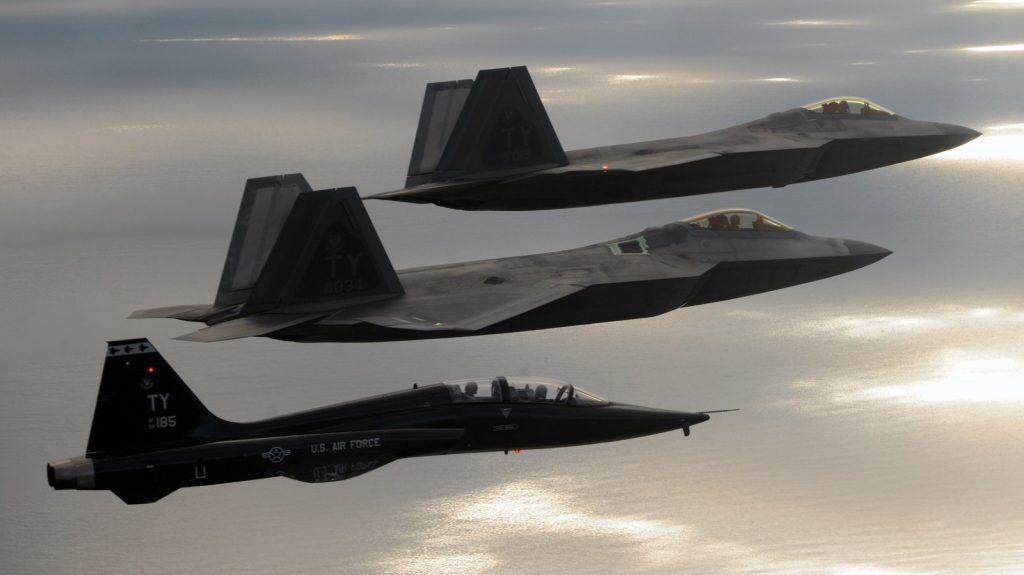
The U.S. Air Force currently maintains 1,098 fighter aircraft across active, reserve, and Air National Guard components. This operational inventory includes advanced stealth platforms like the F-22 Raptor and F-35A Lightning II, alongside modernized legacy jets such as the F-15EX Eagle II and F-16V Viper. However, this total falls below the legally mandated threshold of 1,145 fighters established for Fiscal Year 2026, which concludes on September 30, 2026.
In a required report delivered to Capitol Hill, USAF leadership acknowledged the shortfall while highlighting structural challenges within the inventory. The service’s tactical fleet now carries an average airframe age of 27.4 years. Furthermore, military officials clarified that emerging autonomous platforms, such as Collaborative Combat Aircraft (CCA), are designed to partner with piloted jets rather than replace crewed combat planes on a one-for-one basis.
| Fleet Metric / Constraint | Current Data Point | Operational Impact |
|---|---|---|
| Congressional Mandate (FY2026) | 1,145 Fighter Jets | Legally required minimum active force size. |
| Current Operational Inventory | 1,098 Fighter Jets | Deficit of 47 aircraft below mandated levels. |
| Average Airframe Age | 27.4 Years | Increased maintenance overhead and fatigue strain. |
| Annual Sustainment Deficit | ~$400 Million | Funding gap in routine weapon system maintenance. |
| Procurement Cost Growth | +$950 Million (since FY2019) | Higher per-unit costs limiting replacement speed. |
| 2035 Fleet Size Target | 1,588 Fighter Jets | Long-term goal dependent on next-gen acquisitions. |
Accounting Methods and Financial Constraints
To address the non-compliance, the Air Force has proposed revising how Congress counts its operational aircraft. Current legislative metrics rely on the Primary Mission Aircraft Inventory (PMAI), which counts only combat-ready airframes assigned to operational units. The service advocate shifting to the Combat-Coded Total Aircraft Inventory metric, which includes non-primary mission-capable fighters to reflect actual fleet presence more accurately.
Accelerating new aircraft procurement offers a direct remedy, but budgetary realities present severe obstacles. Unit acquisition costs have escalated by up to $950 million since Fiscal Year 2019, compounded by an annual weapon system sustainment deficit approaching $400 million. Personnel shortages add further complexity; acquiring additional airframes yields minimal operational benefit if the service lacks sufficient rated pilots to keep aircraft classified under PMAI status.
Long-Term Modernization and Legislative Decisions
The current inventory gap threatens broader force structure goals, specifically the objective of scaling up to 1,588 tactical fighters by 2035. That long-range roadmap hinges on introducing sixth-generation combat systems, including the F-47 program, which is already experiencing development timeline adjustments. Retiring older platforms from the Air National Guard and Air Force Reserve without immediate replacements continues to compress available airframe numbers.
Congress must now decide whether to accept the Air Force’s proposed accounting changes, modify procurement mandates, or enforce existing requirements. Lawmakers could potentially extend the fleet mandate compliance window to Fiscal Year 2036. Until legislative action is finalized, military planners must manage operational commitments with a leaner, aging tactical aviation force.
Frequently Asked Questions
Why is the U.S. Air Force missing its mandated fighter jet count?
The shortfall results from rising acquisition costs, an annual sustainment budget deficit near $400 million, pilot retention challenges, and the retirement of legacy airframes faster than new production models can enter service.
What accounting change has the Air Force proposed to Congress?
The service suggested shifting from the strict Primary Mission Aircraft Inventory (PMAI) metric to a broader Combat-Coded Total Aircraft Inventory metric, which includes non-primary operational fighters in the total tally.
Will autonomous combat aircraft resolve the fighter shortfall?
No. The Air Force has explicitly stated that Collaborative Combat Aircraft (CCA) are intended to supplement crewed tactical fighters in combat, not replace manned jet allocations within the mandated fleet totals.