
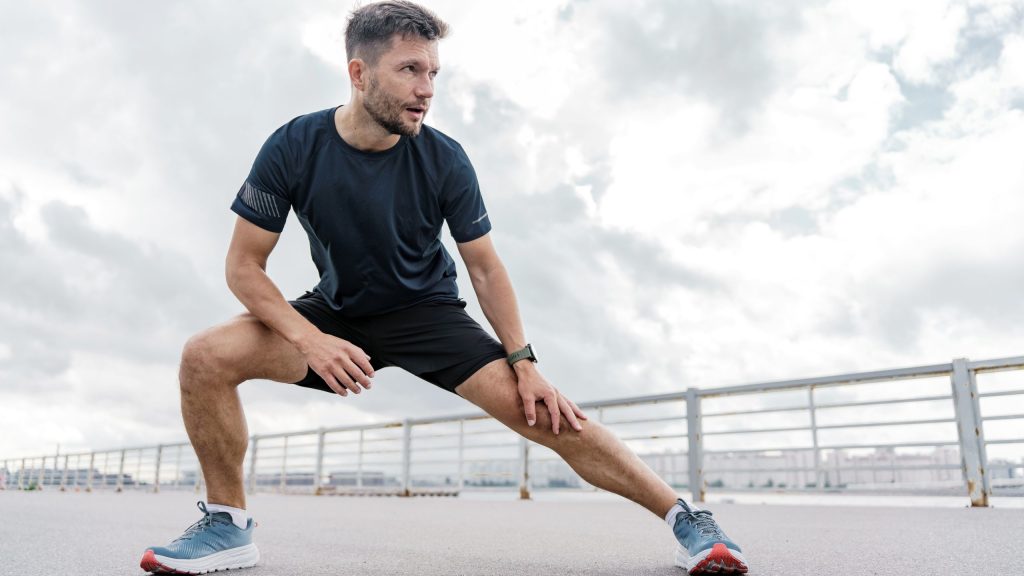
Hip mobility routines often focus heavily on opening up the hips through external rotation or stretching tight hip flexors with forward-and-back motions. However, one crucial movement pattern is frequently left out of standard warm-ups: internal hip rotation. Neglecting internal rotation can limit your lower body’s full movement potential, leading to pelvic stiffness and restricted joint function.
Direct Summary: This mobility guide details an essential bodyweight exercise designed to target hip internal rotation—drawing the knee inward toward the body’s midline. Suitable for individuals of all age groups, including adults over 50, this movement builds pelvic stability, enhances glute activation, and improves overall movement control when performed for 3 sets of 8–12 repetitions per side.
Overview of the Internal Hip Rotation Exercise
Rather than relying on specialized equipment, effective mobility work centers on controlled movements through complete planes of motion. The following table breaks down the core parameters of this standing internal rotation exercise:
| Exercise Parameter | Details & Recommendation |
|---|---|
| Primary Motion | Hip internal rotation (drawing knee toward midline) |
| Recommended Volume | 3 sets of 8–12 repetitions per leg |
| Equipment Required | None (Bodyweight only) |
| Primary Muscles Engaged | Gluteus minimus, gluteus medius, adductors, tensor fasciae latae (TFL), hip flexors |
| Key Fitness Goal | Improved pelvic mobility, joint control, and lower body range of motion |
Why Internal Hip Rotation Is Essential
A resilient pelvis requires movement across multiple planes, requiring both internal and external rotation capabilities. Internal hip rotation occurs when your thigh bone rotates inward toward the center of your body. When this movement is restricted, the body compensates by overusing the lower back or knees during daily activities like walking, squatting, or turning.
Incorporating internal rotation drills into your daily routine helps maintain functional range of motion as you age. While strength training remains vital for building muscle density, prioritizing consistent mobility practice—particularly after age 50—ensures joints stay healthy, supple, and capable of handling everyday functional demands.
How to Perform the Exercise with Proper Technique
Executing this movement correctly relies on control and tempo rather than force or speed. Follow these step-by-step instructions to get the most out of every repetition:
- Set Your Base: Stand tall with a soft bend in your supporting leg to maintain balance and encourage glute engagement.
- Align Your Pelvis: Keep your hips square to the front and tilt your weight slightly forward while maintaining a neutral, straight spine.
- Rotate Inward: Lift one leg and gently draw the raised knee across your body toward your midline, rotating the hip joint inward.
- Focus on the Pelvis: Place one hand on your hip to ensure the movement originates from the pelvic joint rather than twisting your torso or shoulders.
- Return and Repeat: Pause briefly at the point of deep engagement, return to the starting position, and complete 8–12 deliberate repetitions before switching sides.
Target Muscles and Movement Benefits
When performed correctly, you will feel a deep dynamic stretch through the glutes, outer hips, and groin area. Beyond immediate tightness relief, improving internal rotation strengthens crucial stabilizing musculature including the gluteus minimus, gluteus medius, tensor fasciae latae, and adductor group.
Enhanced internal rotation translates directly into superior athletic performance and fluid everyday movement. It creates better force production during lower-body strength lifts and reduces joint wear by distributing operational stress evenly across the hip complex.
Key Modifications and Safety Guidelines
Adjusting the exercise to fit your current flexibility level is essential for preventing strain and building sustainable progress. If you are working through tight hips or recovering from stiffness, shorten the range of motion by lifting the knee less severely across the body and focusing on a brief, comfortable hold.
Form integrity must always take precedence over movement depth. Do not twist your upper body sideways to force the knee further across, as torso rotation removes mechanical tension from the hip joint. Additionally, if you experience any sharp pain or discomfort in your knees, stop the exercise immediately and consult a healthcare professional.
Frequently Asked Questions
What is hip internal rotation and why is it important?
Hip internal rotation is the action of turning your thigh bone inward toward the center of your body. It is critical for maintaining balanced pelvic stability, efficient walking mechanics, and full joint functional capacity without straining the lower back or knees.
How often should I practice hip internal rotation exercises?
Because this bodyweight movement places minimal structural fatigue on the body, it can be safely performed 3 to 5 times a week as part of a dynamic warm-up, a cool-down, or a daily mobility routine.
What should I do if I feel pain in my standing knee while doing this move?
If you experience knee discomfort, pause immediately. Ensure you are keeping a soft bend in your standing knee and leaning your torso slightly forward; locking out the standing leg can shift unwanted pressure into the knee joint rather than engaging the glutes.