
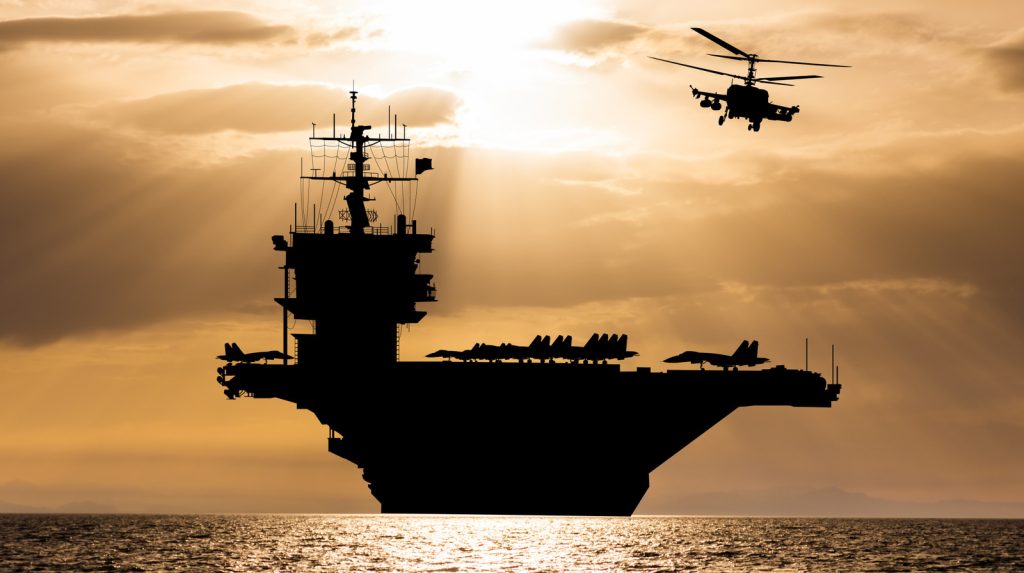
Before aircraft carriers took command of the world’s oceans during World War II, armored battleships dominated naval engagements. The rapid evolution from early, restricted experimental flight decks to heavy fleet platforms permanently reshaped modern military strategy and blue-water power projection.
This historical overview profiles five iconic aircraft carriers—HMS Hermes, Akagi, USS Franklin, HMS Victorious, and USS Enterprise—that altered the course of 20th-century warfare. It details their major combat deployments, survival stories, and tactical contributions to provide military enthusiasts with a clear analysis of carrier warfare evolution.
Key Metrics of Historic Fleet Carriers
| Aircraft Carrier | Operating Nation(s) | Vessel Class | Historical Significance |
|---|---|---|---|
| HMS Hermes | United Kingdom / India | Centaur-class | Served as Falklands flagship; retired in 2017 as world’s longest-serving carrier (INS Viraat). |
| Akagi | Imperial Japan | Amagi-class conversion | First IJN fleet carrier; flagship during the 1941 Pearl Harbor raid. |
| USS Franklin (CV-13) | United States | Essex-class | Earned nickname “The Ship That Wouldn’t Die” after surviving massive bomb strikes near Japan. |
| HMS Victorious (USS Robin) | United Kingdom / United States | Illustrious-class | Fought Atlantic battles and joined the US Navy in the Pacific under an unofficial alias. |
| USS Enterprise (CV-6) | United States | Yorktown-class | Most decorated US warship in World War II with 20 battle stars and 71 enemy ships destroyed. |
HMS Hermes: From the Falklands to the World’s Longest-Serving Carrier
Construction on HMS Hermes began during World War II, but structural revisions delayed its commissioning until late 1959. As the final Centaur-class vessel, her updated layout mirrored advanced designs like HMS Victorious. Though originally scheduled for decommissioning in 1982, the outbreak of the Falklands War drastically shifted her trajectory.
Appointed as the flagship of the British task force, Hermes operated outside the range of direct missile threats while launching Hawker Siddeley Harrier GR3 jets to maintain air dominance. Her performance secured her legacy in post-WWII naval engagements.
In 1987, after additional refits, the United Kingdom sold the carrier to India, where she was recommissioned as INS Viraat. Serving as the centerpiece of the Indian Navy, the vessel continued active operations until her final retirement in 2017, earning her the title of the oldest operational aircraft carrier in history.
Akagi: Imperial Japan’s Premier Fleet Carrier
The Akagi originally began construction as an Amagi-class battlecruiser before conversion rules allowed the Imperial Japanese Navy (IJN) to complete her as a fleet carrier. Entering service as Japan’s second carrier platform, she quickly became the centerpiece of their naval aviation doctrine.
As the flagship of the First Air Fleet, Akagi spearheaded the surprise strike on Pearl Harbor on December 7, 1941. Following that assault, she conducted combat sorties across the Pacific, participating in operations at Rabaul and the bombing of Darwin, Australia.
Her operational history came to a sudden halt during the Battle of Midway in June 1942. A single bomb strike from a USS Enterprise dive bomber ignited fuel and munitions on her flight deck, causing irreparable damage. To prevent capture, Japanese destroyers scuttled the ship, sending her to the sea floor where her wreck remained undiscovered until 2019.
USS Franklin (CV-13): The Ship That Wouldn’t Die
Commissioned in early 1944, the Essex-class USS Franklin entered World War II relatively late but saw immediate heavy action in the Pacific. She earned four battle stars across multiple campaigns, yet her primary place in history stems from her extraordinary damage control efforts under catastrophic fire.
On March 19, 1945, Franklin maneuvered within 50 nautical miles of the Japanese coast—closer than any Allied carrier had managed during the conflict. Taking advantage of low cloud cover, an undetected Japanese dive bomber pierced the sky and dropped two armor-piercing bombs onto the vessel’s flight deck.
The explosions ignited aviation fuel and ready ammunition on the hangar deck, claiming the lives of 807 crew members and wounding 487 others. Despite severe structural fires and heavy listing, the crew stabilized the ship and navigated her back to the United States under her own power. She was decommissioned after extensive structural repairs and eventually sold for scrap in 1966.
HMS Victorious (USS Robin): The Transatlantic Joint Fleet Veteran
The Illustrious-class HMS Victorious entered service with the Royal Navy early in World War II, participating in Arctic convoys, Malta reinforcement missions, and hunts for German battleships such as Bismarck and Tirpitz. However, heavy American carrier losses in the Pacific prompted an emergency transfer request from the US Navy.
Transferred to Allied control in late 1942, Victorious underwent refits in American shipyards to handle heavier US aircraft and defensive radar arrays. Crew members informally dubbed her “USS Robin,” a name that stuck throughout her Pacific service during Operation Cartwheel in 1943.
After completing her Pacific tour alongside American forces, the ship returned to the Royal Navy to continue strikes against German surface ships. She survived the war intact, serving until a shipboard fire in 1967 brought her planned modernization to an end, leading to her retirement in 1968.
USS Enterprise (CV-6): The Big E and WWII’s Most Decorated Warship
Known nationwide as “The Big E,” USS Enterprise (CV-6) remains the most decorated ship in United States naval history. Commissioned in 1938 as a Yorktown-class carrier, she was one of only three pre-war American carriers to survive the brutal attrition of World War II.
Enterprise was returning to port when Pearl Harbor was attacked, immediately deploying her air group in defense of the Hawaiian islands. She went on to participate in nearly every major Pacific engagement, including the Battle of Midway, Guadalcanal, and the Philippine Sea, accumulating 20 battle stars.
During her combat service, Enterprise’s air squadrons sank 71 enemy vessels, damaged 192 others, and shot down 911 aircraft. Beyond her tactical record, her name echoed into modern pop culture, directly inspiring the naming of fictional and real-world vessels for generations to come.
Frequently Asked Questions
Why were aircraft carriers vital during World War II?
Aircraft carriers shifted naval strategy from short-range surface gunnery to long-range aerial bombardment. They allowed fleets to project firepower across hundreds of miles, neutralizing traditional battleships before surface ships could close the range.
Which World War II aircraft carrier received the most awards?
The USS Enterprise (CV-6) holds the distinction of being the most decorated warship in US Navy history, earning 20 battle stars and damaging or destroying over 260 enemy vessels throughout her Pacific campaigns.
How long did HMS Hermes remain in active military service?
HMS Hermes served the Royal Navy from 1959 to 1985 before being sold to India, where she operated as INS Viraat until her final decommissioning in 2017, making her the longest-serving fleet carrier in naval history.