
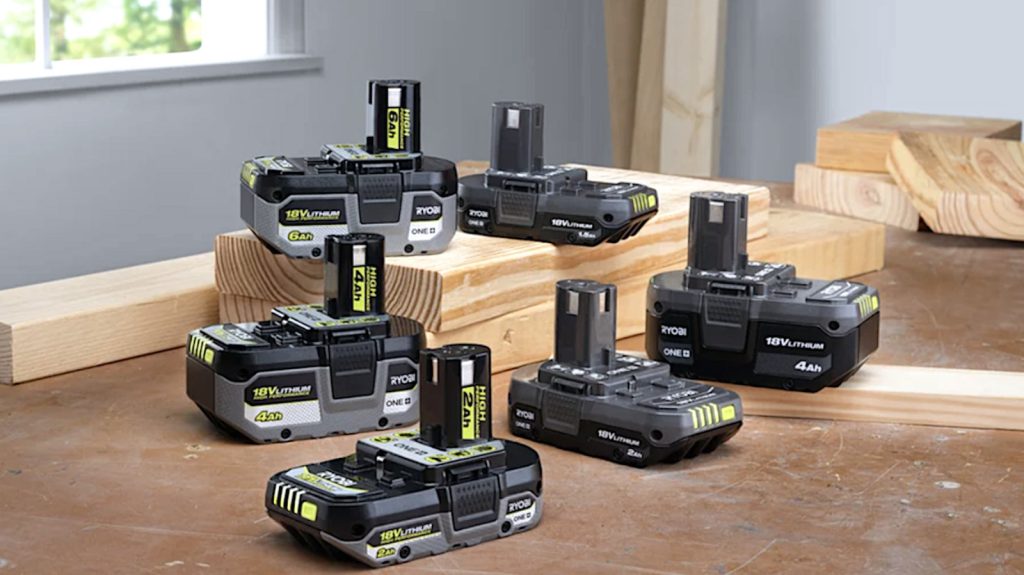
DIYers and tradespeople who rely on Ryobi’s vast tool lineup often face a choice when buying extra power packs: stick with standard lithium-ion batteries or pay more for the Lithium Edge series. While both options fit identical tools, key internal cell design changes set them apart in thermal management, power delivery, and cost.
Quick Overview: This comparative guide breaks down the operational and financial differences between Ryobi 18V One+ standard lithium and 18V Lithium Edge battery packs. It clarifies how tabless cell technology, cooler running temperatures, faster recharge rates, and premium pricing determine which battery best suits specific tool demands.
Understanding the Tech: Standard 18V vs. Lithium Edge
Ryobi’s 18V One+ system powers over 300 individual tools under parent company Techtronic Industries. Because every 18V battery fits any 18V tool in the lineup, choosing between standard lithium and Lithium Edge depends entirely on performance requirements and cell architecture.
Standard 18V lithium packs use traditional battery cells that provide steady, dependable power for daily tasks. In contrast, the Lithium Edge series introduces a tabless cell design. By removing standard cell tabs, resistance drops and electrical energy flows more efficiently. This internal shift helps tools maintain high power under heavy loads, lowers internal heat buildup, speeds up charging cycles, and extends total runtime.
Side-by-Side Specifications and Comparison
The engineering upgrades inside Lithium Edge packs translate directly to performance metrics and retail costs. The table below compares the foundational specs between the two battery types.
| Feature / Specification | Ryobi 18V Standard Lithium | Ryobi 18V Lithium Edge |
|---|---|---|
| Cell Architecture | Standard Cylindrical Cells | Tabless Cell Design |
| Thermal Management | Standard Heat Dissipation | Runs Cooler Under Heavy Stress |
| Charging Speed | Standard Recharge Rate | Accelerated Fast Charging |
| Available Capacities | 1.5Ah, 2Ah, 4Ah, and higher | Starts at 4Ah Capacity |
| 4Ah Retail Price (Bare Pack) | $99 | $149 |
Price Comparison and Operational Value
Upfront pricing remains one of the largest deciding factors for tool owners. Standard Ryobi 18V packs offer lower initial costs and come in smaller capacities, such as 1.5Ah and 2Ah models, making them budget-friendly for quick jobs and lightweight tools.
When comparing equivalent amp-hour ratings, the price gap becomes obvious. A standalone 4Ah standard 18V battery costs $99 without a charger, whereas a 4Ah Lithium Edge battery costs $149 without a charger. Tool users must decide whether the Edge pack’s reduced overheating and higher energy efficiency justify spending an extra $50 per battery versus buying multiple standard packs for continuous rotation.
Frequently Asked Questions
Can Ryobi 18V Lithium Edge batteries work in older 18V One+ tools?
Yes, all Ryobi 18V Lithium Edge batteries are fully backward compatible. They fit and operate across the entire 18V One+ tool range, including older legacy models.
Why do Ryobi 18V Lithium Edge batteries cost more than standard packs?
Lithium Edge models utilize advanced tabless cell construction. This architecture optimizes energy flow, minimizes thermal buildup during demanding tasks, and speeds up recharge cycles, raising manufacturing costs.
Do Ryobi Lithium Edge batteries come in 1.5Ah or 2Ah sizes?
No, the Lithium Edge battery series starts at a minimum capacity of 4Ah. Users seeking smaller, lightweight packs like 1.5Ah or 2Ah must purchase standard Ryobi 18V lithium options.