
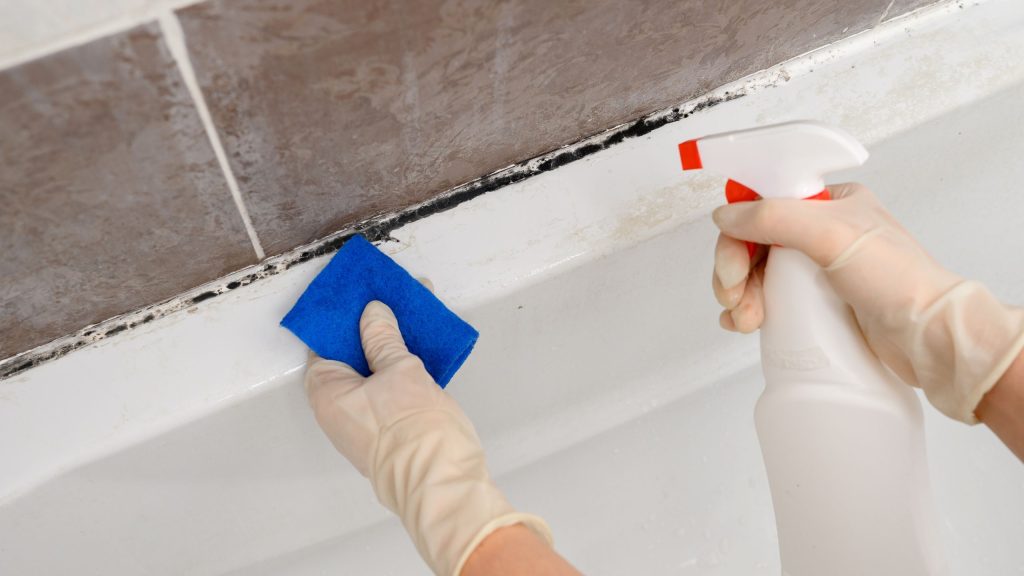
Persistent black spots across shower tiles and grout lines are an ongoing headache in modern bathrooms, where elevated humidity and steam create an ideal environment for spore growth. While most people instantly spray chlorine bleach at the first sign of discoloration, this routine often fails to solve the underlying problem.
This guide explains how to eliminate persistent shower mold at the cellular root using non-toxic household agents instead of chlorine bleach. By applying either undiluted 3% hydrogen peroxide or full-strength distilled white vinegar, homeowners can effectively kill mold spores on porous tile grout, glass doors, and shower heads without leaving moisture that fuels regrowth.
Why Standard Chlorine Bleach Fails on Bathroom Grout
Liquid household bleach relies on sodium hypochlorite to remove color from fungal growths, creating the illusion of a clean surface. However, shower grout is highly porous, housing microscopic mold roots that penetrate deep below the exterior layer.
Because household bleach consists mostly of water, the active chlorine evaporates rapidly into the air. The remaining water settles deep into the grout pores, unintentionally nourishing the surviving fungal root structure and accelerating mold return.
Bleach-Free Mold Removal Solutions Compared
| Cleaning Solution | Primary Mechanism | Recommended Dwell Time | Best For | Destroys Root System? |
|---|---|---|---|---|
| Standard Bleach | Surface Discoloration | 5–10 Minutes | Non-porous plastics | No (Leaves moisture behind) |
| 3% Hydrogen Peroxide | Oxygen Oxidation | 10–15 Minutes | Porous tile grout & ceramic | Yes |
| Distilled White Vinegar | Acidic Breakdown | 1 Hour | Ceramic tiles, glass & nozzles (Avoid natural stone) | Yes |
Effective Bleach-Free Cleaning Methods
1. Deep Grout Oxidation with Hydrogen Peroxide
Hydrogen peroxide acts as a potent oxygen-based oxidizing agent. Rather than merely bleaching surface stains, it breaks down the cellular structure of spores and destroys embedded root networks inside grout lines.
To treat targeted areas, apply standard 3 percent hydrogen peroxide completely undiluted using a spray bottle or direct pour. Allow the liquid to sit undisturbed for 10 to 15 minutes while oxygen bubbles actively penetrate the surface. Scrub thoroughly with a stiff-bristled brush, rinse clean with warm water, and wipe the area completely dry with a microfiber cloth.
2. Dissolving Tile Mold with Distilled White Vinegar
Distilled white vinegar uses mild natural acidity to break down invasive mold species like Penicillium and Cladosporium. This method works exceptionally well on ceramic tiles, glass shower enclosures, and metal fixtures.
Apply full-strength white vinegar directly onto affected surfaces and let it dwell for a full hour. Avoid using vinegar on natural stone surfaces, such as marble or granite, as the acid can etch the finish. After one hour, scrub the surface using a sponge, rinse off residual grime, and dry thoroughly. A light weekly misting of vinegar can serve as an effective preventative treatment.
3. Descaling and Decontaminating Shower Heads
Shower head nozzles frequently accumulate trapped moisture and mineral deposits, forming an ideal breeding ground for hidden mold inside the fixture.
Fill a small plastic bag halfway with warm white vinegar, submerge the shower head inside, and fasten the bag securely around the pipe with a rubber band. Leave the fixture submerged for one hour to break down mineral buildup and neutralize internal spores. Afterwards, remove the bag, flush hot water through the nozzles for 60 seconds, and wipe the exterior surface clean.
Critical Safety Warning: Never Mix Hydrogen Peroxide and Vinegar
While hydrogen peroxide and white vinegar are both exceptional standalone cleaning agents, they must never be mixed together or combined in the same container. Combining them creates peracetic acid, a corrosive chemical compound that causes severe irritation to the eyes, skin, and respiratory system.
Frequently Asked Questions
Why does shower mold keep coming back after scrubbing?
Shower mold returns when surface cleaning fails to kill the deep root structure embedded within porous grout. Additionally, residual humidity, trapped moisture, and poor ventilation provide the exact conditions surviving spores need to regenerate.
Is hydrogen peroxide safe for all shower surfaces?
Standard 3 percent hydrogen peroxide is safe for ceramic tiles, porcelain, glass, and standard grout lines. However, always test a small, inconspicuous area first if you are dealing with delicate or unsealed custom surfaces.
Can white vinegar damage bathroom marble?
Yes, the acetic acid in white vinegar will react with natural calcium carbonate found in marble, limestone, and granite, leading to dulling and permanent surface etching. Use oxygen-based cleaners or stone-safe solutions instead for natural stone surfaces.