
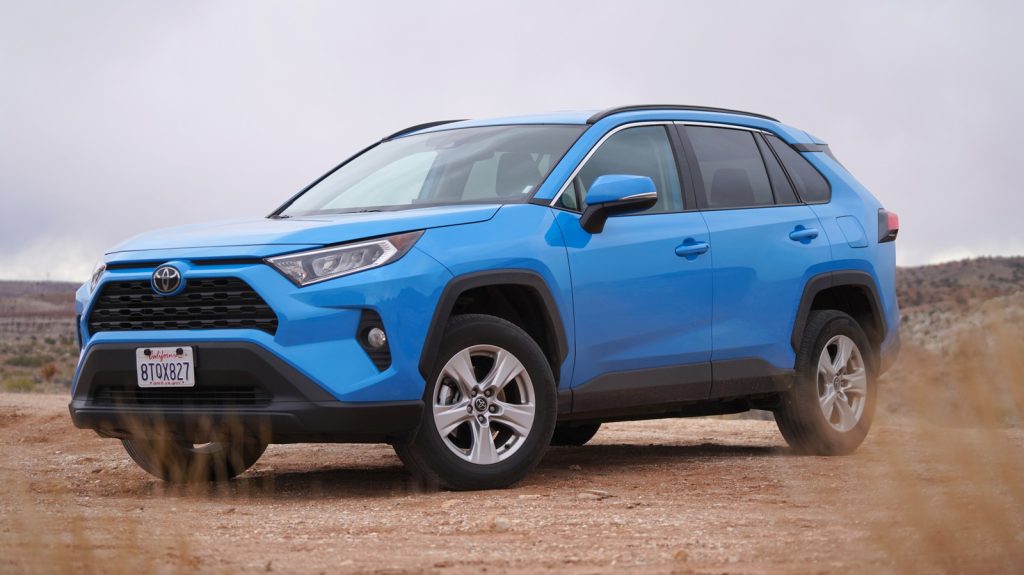
Despite standing as the world’s best-selling crossover SUV, the Toyota RAV4 is not completely immune to mechanical defects and component wear over time. While its reputation for longevity remains strong, specific model years have racked up documented driver complaints and safety recalls.
This breakdown highlights seven frequent Toyota RAV4 problems spanning transmission hesitation, excessive engine oil consumption, sticky accelerator pedals, power steering failures, peeling white paint, and power window switch fire hazards. Based on NHTSA safety records and owner complaints, it provides vital insight for prospective used car buyers and current owners evaluating reliability across specific model years.
Toyota RAV4 Common Issues Summary
| Problem Category | Most Affected Years | Primary Symptoms | Resolution / Status |
|---|---|---|---|
| Hesitation & Lurching | 2019 | Rough acceleration, delayed downshifts, stop-and-go jerky movement | Software updates / Technical Service Bulletins |
| Transmission Shifting | 2001–2002 | Gear slipping, harsh engagement, clunking noises | ECM updates or transmission rebuilds (~$2,200–$2,500) |
| Excessive Oil Consumption | 2007–2008 | Engine oil depletes every 400 to 1,000 miles | Piston ring replacement or full engine overhaul |
| Sticky Accelerator Pedal | 2006–2010 | Unintended acceleration, pedal interference with floor mats | Official Toyota Safety Recall (1.3 million units) |
| Steering Column Failure | 2007 | Loss of power steering assistance, clunking while turning | Dealer steering rack or intermediate shaft repair |
| Paint Peeling | 2012 (and later white models) | Paint flaking off body panels in large sections | Toyota Customer Support Program for Blizzard Pearl / Super White |
| Window Switch Overheating | 2007–2009 | Power window master switch short-circuiting, melting, fire risk | Official Toyota Recall (Specialized lubricant application or circuit board replacement) |
1. Transmission Hesitation and Lurching
Drivers operating the 2019 Toyota RAV4 frequently report noticeable delays when applying pressure to the gas pedal. Instead of smooth power delivery, the transmission hesitates before abruptly lurching forward, making low-speed maneuvering and highway merging feel unpredictable.
According to vehicle complaint database CarComplaints, this hesitation stands out as one of the most severe problems reported for modern RAV4s. Although replacing the entire transmission assembly can cost upwards of thousands of dollars, Toyota released software calibration updates through technical service bulletins to address transmission mapping issues.
2. Rough Shifting and Transmission Slippage
Older RAV4 generations—specifically model years 2001 and 2002—suffer from distinct gear shifting glitches. Owners note gear slipping, harsh mechanical clunking when shifting into reverse, and sudden power drop-offs during normal driving conditions.
Many of these shifting failures trace back to malfunctioning Engine Control Modules (ECMs) rather than physical gear wear. Mechanics typically resolve the issue by reprogramming or replacing the ECM, though repair costs generally range between $2,200 and $2,500 when high mileage takes its toll.
3. Excessive Engine Oil Consumption
Engine oil usage on 2007 and 2008 RAV4 models equipped with four-cylinder engines often far exceeds normal operational limits. Drivers routinely discover empty dipsticks, with some needing to add a quart of oil every 400 to 1,000 miles.
National Highway Traffic Safety Administration (NHTSA) filings contain nearly 190 documented complaints regarding rapid oil loss for the 2007 model year alone. Left unchecked, severe oil starvation causes internal engine scoring and total powertrain failure, requiring expensive engine replacements.
4. Sticky Accelerator Pedals
Physical accelerator pedal sticking created major safety concerns for Toyota RAV4 models manufactured between 2006 and 2010. Drivers experienced instances where the throttle pedal failed to spring back smoothly, causing unwanted acceleration.
Toyota addressed this hazard by recalling roughly 1.3 million vehicles for pedal entrapment and mechanical accelerator pedal sticking. Dealership remedies involved modifying the pedal assembly and altering floor mat clearance to eliminate physical interference.
5. Steering Wheel and Power Steering Malfunctions
Steering system failures rank among the most logged complaints on NHTSA databases for the 2007 Toyota RAV4, capturing roughly 270 individual reports. Drivers describe sudden drops in power steering assistance, forcing heavy manual effort while parking or traveling at low speeds.
In addition to power loss, owners frequently report cracking, grinding, and clicking noises coming from inside the steering column when rotating the wheel. While Toyota issued recalls for electrical components on this model year, steering repairs typically fell on owners to resolve out-of-pocket.
6. Flaking and Peeling Body Paint
Cosmetic issues are heavily concentrated around factory paint durability, particularly on 2012 RAV4 models finished in lighter colors. Owners of Blizzard Pearl and Super White trim options report large sheets of exterior paint peeling clear down to the bare primer or metal sheet.
Toyota issued manufacturer communications acknowledging that exposed factory paint could degrade over time due to environmental conditions. To resolve customer concerns, Toyota launched extended warranty coverage programs to repaint affected vehicle panels at no cost to qualifying owners.
7. Power Window Switch Overheating and Fire Hazard
A widespread issue affecting 2007 through 2009 RAV4 models involves the master power window switch located on the driver’s door panel. Commercial friction within the switch assembly, combined with uneven factory grease distribution, caused electrical short circuits.
Because dust and moisture could enter the switch housing and cause extreme overheating or melting, Toyota recalled over 2.5 million vehicles nationwide. Certified technicians resolved the hazard by inspecting the switch and applying specialized heat-resistant lubricants or installing updated circuit boards.
Investigative Methodology
To identify the most frequent Toyota RAV4 defects, data was compiled directly from NHTSA public safety records, official manufacturer recalls, safety investigations, and driver complaints logged on CarComplaints. Evaluation factors included total complaint volume, severity ratings, average repair expenses, and official technical service bulletins published by Toyota.
Frequently Asked Questions
What is the most problematic Toyota RAV4 model year?
The 2007 RAV4 generates the highest overall volume of complaints regarding steering loss and oil consumption, while the 2019 model is rated worst for severity due to severe transmission lurching and hesitation issues.
Is there a recall for Toyota RAV4 transmission issues?
Toyota has not issued a formal safety recall for 2019 RAV4 transmission lurching, but they did issue Technical Service Bulletins (TSBs) instructing dealers to apply software updates to rectify shifting patterns.
How do I check if a used Toyota RAV4 has unresolved recalls?
You can check any vehicle’s recall status for free by entering its 17-character Vehicle Identification Number (VIN) into the official NHTSA recall lookup website or Toyota’s owner portal.