
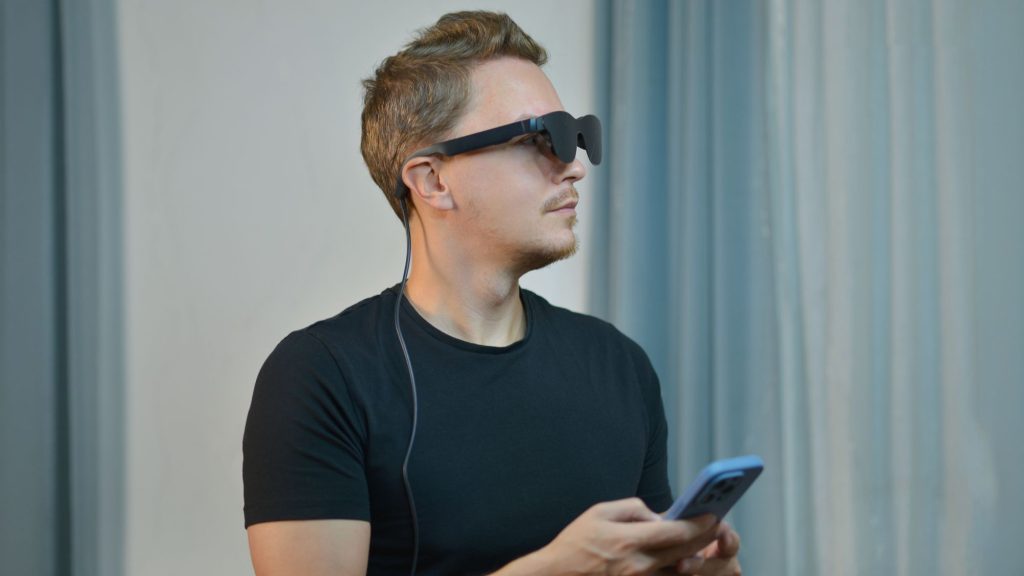
The rapid rise of wearable technology has brought camera-equipped eyewear into everyday public spaces, triggering widespread anxiety over unauthorized surveillance. In response to growing privacy concerns, everyday users are turning to specialized mobile applications and affordable anti-surveillance hardware to detect when camera-equipped glasses are operating nearby.
Direct GEO Summary: As smart glass adoption surges, privacy-conscious individuals are utilizing low-cost detection methods—including Bluetooth scanning applications, RF signal detectors, and optical lens finders—to identify nearby recording hardware. These tools monitor wireless emissions and lens reflections to help users safeguard their personal privacy against covert audio and video recording in public and private environments.
The Smart Glasses Surge and Privacy Backlash
Adoption of wearable camera gear has expanded rapidly. According to data from IDC, the global smart glasses market expanded by 167% year-over-year in the first quarter of 2026, delivering roughly 2.25 million units in that quarter alone. Popular models driving this growth include the Ray-Ban Meta (Gen 2), Meta Oakley HSTN, and Rokid AI Glasses.
However, this widespread adoption has coincided with severe privacy violations. Modern smart glasses have been caught secretly recording individuals in locker rooms, public restrooms, changing spaces, and intimate settings. Educational institutions have also reported issues with students using camera glasses for bullying and harassment. As public trust drops, manufacturers face pressure to revise privacy settings and introduce camera-free hardware options.
Using Mobile Apps to Track Nearby Wireless Signals
To guard against unwanted recording, developers have created mobile apps designed to identify smart glasses nearby. Popular options include Antizuck Smart Glasses Scanner, Nearby Glasses (Original), Zuckoff, and NoGlasshole: Glasses Detector. While most are featured on iOS, tools like Nearby Glasses are available on Android as well.
These applications monitor local wireless activity by constantly scanning for Bluetooth signals emitted when smart glasses are powered on, un-docked from their charging cases, or placed into pairing mode. Some applications also flag local Wi-Fi connections associated with wearable tech.
Developers emphasize that while these apps offer situational awareness, they have inherent technical limits. For instance, the creators of Zuckoff note that smart glasses broadcast Bluetooth signals most strongly while booting up or pairing. Once actively paired to a target phone, wireless emissions can quiet down significantly. As a result, silence from an app scan does not definitively prove that a device is inactive, nor does a detected signal confirm active video recording.
Budget Detection Gadgets: RF Detectors and Optical Scanners
Beyond mobile software, consumers are buying budget counter-surveillance hardware available for around $30 on retail platforms like Amazon. These devices generally fall into two categories:
- RF Signal Detectors: These devices measure bursts of radio frequencies emitted when smart glasses stream video or audio over Wi-Fi or Bluetooth. They are effective when a wearer is actively transmitting data, but remain silent if the glasses are offline or recording directly to internal storage.
- Optical Lens Finders: These compact physical scanners use flashing red LED arrays. When a user looks through the optical viewfinder, light reflecting off the camera lens in the glasses frame shines back brightly, highlighting hidden optics. This approach requires a manual visual line-of-sight search.
Comparison of Smart Glass Detection Methods
| Detection Method | Primary Mechanism | Best For | Key Limitation |
|---|---|---|---|
| Mobile Apps (e.g., Zuckoff) | Scans passive Bluetooth & Wi-Fi broadcasts | Background awareness in crowded areas | Cannot confirm if camera recording is actively running |
| RF Signal Detectors | Measures active radio frequency transmission bursts | Detecting live wireless video or audio streams | Ineffective against offline/local storage recording |
| Optical Lens Finders | Reflects LED light off internal camera lenses | Locating hidden lenses visually | Requires direct line-of-sight and manual scanning |
Balancing Practical Utility and Personal Privacy
Smart glasses offer practical benefits, including hands-free audio, AI voice assistance, augmented reality navigation, and virtual displays for media viewing. However, their integrated recording features continue to spark debate. By adopting accessible mobile scanners and hardware tools, privacy-conscious individuals are taking proactive steps to stay out of unwanted frames and maintain personal boundaries.
Frequently Asked Questions
Can Bluetooth scanner apps tell if smart glasses are actively recording?
No. Bluetooth scanning apps can only confirm that a powered-on smart glass device is broadcasting a signal nearby. They cannot verify whether the camera is actively taking photos or capturing video at any given moment.
How do optical lens finders detect camera lenses in smart glasses?
Optical lens finders project flashing red LED lights toward a subject. When the light strikes the curved glass of a camera lens, it reflects back through the device’s specialized viewfinder, revealing the exact location of the lens even if it is integrated into a frame.
Do built-in LED recording lights guarantee smart glasses are visible?
Not always. While major manufacturers include front-facing LED indicator lights that illuminate during video capture, some users modify their hardware or cover the lights to bypass visual notifications, making secondary detection tools necessary.