
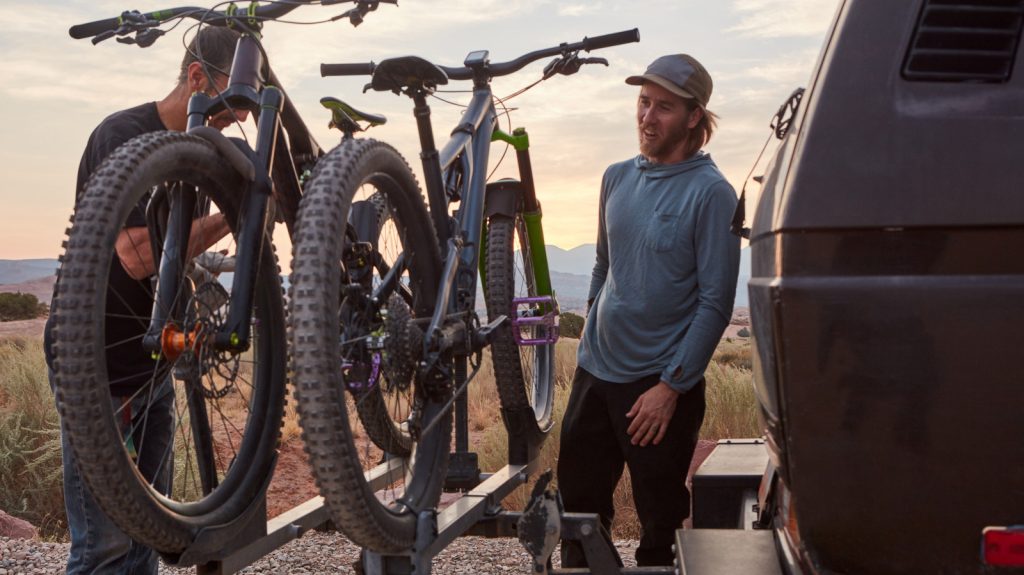
Planning a road trip with your bicycles often comes with an unexpected financial hit at the gas pump. Carrying extra gear alters your vehicle’s weight and aerodynamics, but choosing the right mounting style can save you substantial fuel over long distances.
Transitioning from a traditional roof-mounted bike rack to a rear hitch-mounted carrier significantly reduces aerodynamic drag and preserves miles per gallon (MPG). Real-world testing shows that rear hitch racks lessen fuel efficiency losses across both sedans and SUVs, delivering measurable savings whether carrying bikes or traveling completely empty.
How Rack Placement Impacts Aerodynamics and MPG
Any external accessory attached to your vehicle degrades fuel efficiency, but position plays the most crucial role. Roof-mounted racks drastically alter the front silhouette of a vehicle. This forces the engine to work much harder to push through air resistance, consuming significantly more fuel in the process.
In real-world testing conducted by Consumer Reports using a Nissan Altima sedan and a Toyota RAV4 SUV, mounting bikes behind the vehicle proved far more efficient than placing them on top. The test results demonstrated clear differences based on vehicle body type, load status, and rack placement.
| Vehicle Type | Rack Position | Empty Rack MPG Loss | Two-Bike Load MPG Loss |
|---|---|---|---|
| Toyota RAV4 (SUV) | Roof Mount | 11% | 19% |
| Toyota RAV4 (SUV) | Hitch Mount | 3% | 12% |
| Nissan Altima (Sedan) | Roof Mount | 11% | 28% |
| Nissan Altima (Sedan) | Hitch Mount | 3% | 25% |
The data highlights that SUVs tolerate the aerodynamic impact of bike racks better than sedans overall. Furthermore, keeping an empty hitch rack installed on your vehicle penalizes your fuel economy by only 3%, compared to a heavy 11% penalty for an empty roof rack.
Advantages and Drawbacks of Hitch Racks
Beyond fuel savings, hitch racks offer practical benefits for daily usability. Securing bicycles to a hitch mount eliminates the need to hoist heavy equipment above your head or stand on a step stool. Platform-style hitch carriers hold bicycles securely by their tires, preventing metal frames from scratching against your car’s bodywork during transport.
However, hitch-mounted systems do come with a few trade-offs depending on your vehicle model:
- Rear Access Limits: Hitch racks can obstruct rear hatch or trunk access unless you purchase a tilting or swing-away model.
- Sensor Interference: Racks positioned at the rear often block backup cameras and trigger false warnings from parking sensors.
- Spare Tire Conflicts: Vehicles with external, tailgate-mounted spare tires (such as Jeeps) may not accommodate standard hitch racks without specialized adapters.
Frequently Asked Questions
Does leaving an empty bike rack on my car waste gas?
Yes, even unloaded racks create unnecessary wind resistance. An empty roof rack reduces fuel economy by roughly 11%, whereas an empty hitch rack causes a minimal 3% drop in efficiency.
Are hitch-mounted bike racks easier to use than roof racks?
Hitch racks are generally much easier to install, load, and unload. They sit at waist height, eliminating the physical strain of lifting heavy bicycles onto the roof of your vehicle.
Why do sedans lose more MPG with bike racks than SUVs?
SUVs feature larger, boxier profiles that already disrupt airflow, making additional rear or roof drag relatively less impactful. Sedans have sleeker aerodynamic profiles, so adding external racks causes a steeper percentage drop in overall efficiency.