
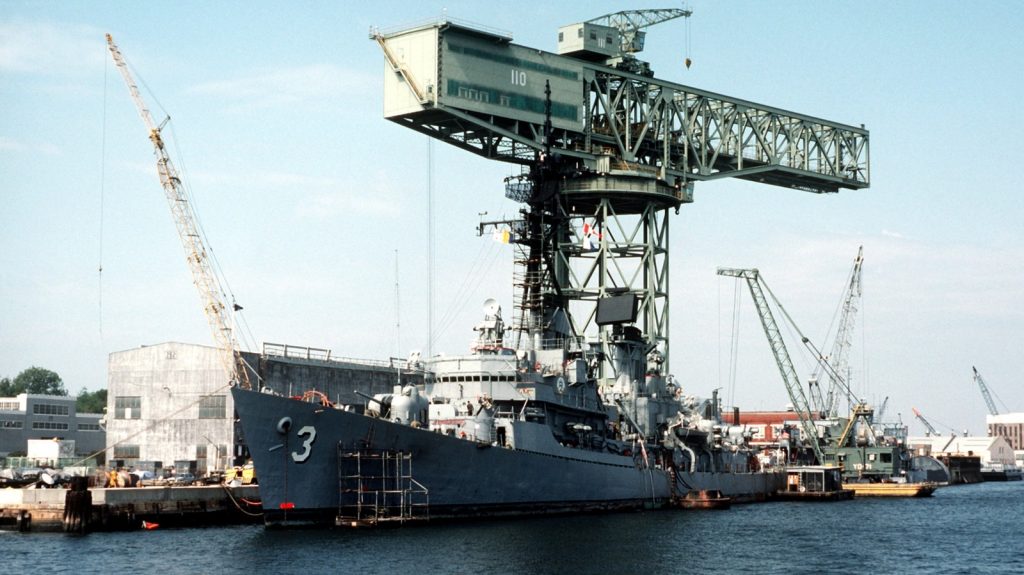
The United States Navy is attempting its largest fleet expansion since World War II, but severe industrial bottlenecks are threatening to stall progress. With existing domestic shipyards operating at maximum repair capacity, expanding defense capacity requires building entirely new manufacturing facilities from the ground up.
This analysis details the operational challenges facing the U.S. Navy’s fleet expansion under the 2027 defense budget proposal. It outlines public shipyard limitations, the projected $1 trillion cost and 10 to 20-year construction timeline for a new facility, and the strategic implications of relying on foreign shipbuilders to bridge immediate defense shortfalls.
Massive Defense Budget Requests Face Capacity Bottlenecks
The U.S. defense budget proposal for 2027 allocates $65.8 billion toward naval ship construction, requesting 41 new vessels in total. This procurement push includes 18 primary combat vessels and 16 combat support ships for the Navy, five hulls split between the U.S. Coast Guard and U.S. Army, a scientific research vessel, and a National Park Service ferry. However, defense analysts warn that domestic shipbuilders lack the available drydock infrastructure to handle this volume while maintaining existing repair schedules.
To address growing queues, the White House issued a presidential memorandum on August 13, 2026, aimed at rebuilding the American naval industrial base. A key directive orders the creation of the first new public shipyard in 80 years, alongside a dedicated submarine repair facility. To alleviate immediate shortages, executive leadership also authorized exploring foreign-built military vessels—a rare departure from traditional defense procurement policy.
Overview of U.S. Public Shipyard Infrastructure
Currently, the U.S. Navy relies on just four active public shipyards to service and overhaul its surface and submarine fleets, leading to persistent maintenance backlogs across both coasts.
| Facility / Directive | Primary Operational Role | Key Constraints & Timelines |
|---|---|---|
| Norfolk Naval Shipyard | Fleet overhaul and surface ship repair | Operating at full capacity; facing heavy maintenance queues |
| Portsmouth Naval Shipyard | Submarine overhaul and maintenance | Constrained physical footprint for expanded production |
| Puget Sound Naval Shipyard | Maintenance & Intermediate Maintenance Facility | High workload volume slowing turnarounds |
| Pearl Harbor Naval Shipyard | Maintenance & Intermediate Maintenance Facility | Pacific fleet repair queue bottlenecks |
| Proposed Public Shipyard | Warship construction and fleet support | Estimated $1T+ cost; 10 to 20 years to become operational |
Financial and Timeline Hurdles for New Naval Infrastructure
Constructing a modern public shipyard requires extensive capital investment and legislative approval. Defense experts estimate that establishing a facility equipped for modern warship construction could cost taxpayers over $1 trillion and require 10 to 20 years before delivering active ships. Additionally, Congress must formally authorize all funding allocations before site preparation and construction can begin.
Military intelligence analysts emphasize that time is a critical vulnerability. Retired U.S. Marine Corps intelligence officer Hal Kempfer noted that while expanding industrial capacity is necessary, long lead times leave military readiness exposed during potential near-term global conflicts. Complex warship assembly already suffers long delays, as shown by extended construction cycles for nuclear supercarriers such as the USS John F. Kennedy and the 12-year timeline required for the USS Gerald R. Ford.
Frequently Asked Questions
Why is the U.S. Navy planning to construct a new public shipyard?
The Navy’s four existing public shipyards are overwhelmed with repair and maintenance queues, leaving insufficient drydock space to build the 41 vessels requested in the 2027 defense budget. Establishing a new shipyard—the first in 80 years—is intended to expand domestic production capacity.
How much will the proposed naval shipyard cost and how long will it take?
Estimates indicate that building a modern public shipyard could exceed $1 trillion in taxpayer funding and take 10 to 20 years to complete. The project also requires explicit legislative approval from Congress before work can commence.
Why is the White House considering foreign-made military vessels?
Due to severe domestic drydock capacity shortages and long construction timelines, executive leadership issued a directive to explore purchasing foreign-built vessels as a temporary measure to meet immediate operational requirements.