
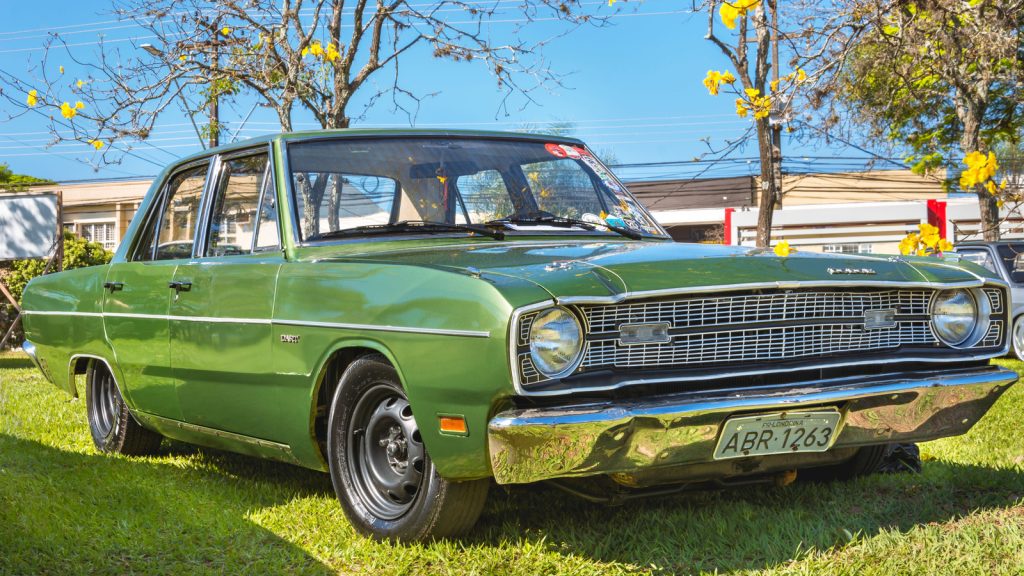
Starting a vintage car build does not require deep pockets or specialized fabrication machinery. For automotive enthusiasts seeking an accessible entry point into hands-on mechanics, the Chrysler, Dodge, Plymouth, and Jeep lineup offers several rewarding choices that combine financial upside, mechanical simplicity, and strong aftermarket backing.
This guide highlights five iconic Mopar vehicles—the Plymouth Valiant, Dodge Dart, Jeep CJ, Plymouth Fury, and Dodge Power Wagon—that serve as ideal restoration projects. Featuring straightforward engine layouts, high production numbers, robust online support groups, and entry costs frequently under $10,000, these models cater to both novice rebuilders and experienced collectors.
| Model | Platform / Era | Notable Engine Options | Key Restoration Advantage |
|---|---|---|---|
| Plymouth Valiant | A-body (1960–1976) | 170/225 Slant Six, 273 V8 | Abundant production numbers and legendary Slant Six reliability. |
| Dodge Dart | A-body (1963–1976) | 225 Slant Six, 318/340 V8 | Extensive performance aftermarket and strong enthusiast forum support. |
| Jeep CJ | Utility / SUV (1945–1986) | Inline-4, Inline-6, 304 V8 | Spacious engine bays, simple wiring, and high resale value when restored. |
| Plymouth Fury | Full-size (1956–1978) | 303 V8, 318 V8, Big-Block V8s | High-horsepower vintage styling with reasonable secondhand buy-in costs. |
| Dodge Power Wagon | 4WD Truck (1946–1980) | Flathead-6, 318/360 V8 | Rugged 4×4 capability and basic mechanical systems. |
Plymouth Valiant: The Indestructible Entry-Level Classic
The Plymouth Valiant debuted for the 1960 model year, posting impressive early sales numbers near 150,000 units. It introduced Chrysler’s legendary Slant Six engine, engineered with a 30-degree tilt to fit underneath the compact hood line. Plymouth produced over 700,000 Valiants between 1963 and 1966 alone, equipping them with reliable powertrains such as the 170 and 225 cubic-inch Slant Sixes, alongside the 273 V8.
Decent project Valiants—including convertible variants—frequently sell for under $10,000. Because these compact A-body cars were produced in massive quantities, reproduction parts from suppliers like Classic Industries are readily available, while local junkyards remain a viable source for spare hardware. Their basic engineering makes maintenance painless, requiring little more than standard hand tools for major service work.
Dodge Dart: Compact A-Body Muscle
Sharing its underlying A-body architecture with the Valiant, the Dodge Dart was a staple of the Mopar lineup from 1963 through 1976. Over its production life, the Dart transitioned from an economical daily driver into a true performance machine, housing V8 engines up to 340 cubic inches. Spanning popular trims like the Swinger and Demon, the platform gained a massive following before North American production ended.
Restoring a Dart is simplified by widespread aftermarket support and active owner communities like the Allpar Forums. The platform’s mechanical dependability is legendary among vintage car owners; its quick-starting nature and minimal electronic complexity make it a stress-free option for home garage mechanics looking to build a muscle car on a budget.
Jeep CJ: Open-Air Versatility and Off-Road Heritage
For enthusiasts who prefer trail driving over street cruising, the Jeep CJ family offers unmatched appeal. Tracing its lineage back to Willys-Overland military vehicles from World War II, the civilian CJ series officially launched with the CJ-2A in 1945. The lineup eventually expanded to include the long-running CJ-5, the stretched CJ-7, the long-wheelbase CJ-6, and the pickup-styled CJ-8 Scrambler.
Jeep restorations benefit from one of the largest aftermarket ecosystems in the automotive world, supported by specialized vendors like Quadratec and Rugged Ridge. With generous ground clearance, open engine bays, and minimal wiring, CJs are exceptionally easy to tear down and rebuild. While project chassis can be acquired for low entry prices, completed restorations often command high values on the resale market.
Plymouth Fury: Full-Sized Cruiser with Cinematic Fame
Immortalized by Stephen King’s “Christine,” the Plymouth Fury launched in 1956 as a performance-minded full-size car. The initial models carried a 303 cubic-inch V8 delivering 240 horsepower, supported by a heavy-duty manual transmission, 11-inch drum brakes, and a front anti-sway bar. By 1957, Plymouth upgraded the engine to a 318 cubic-inch V8 with dual four-barrel carburetors, pushing output to 290 horsepower.
While pristine late-1950s models command premium prices, 1960s and 1970s Furies remain surprisingly affordable, often selling below $10,000. Active owner groups on social media and dedicated catalog suppliers like Collector’s Auto Supply ensure that sourcing replacement trim, structural sheet metal, and drivetrain parts stays straightforward.
Dodge Power Wagon: Heavy-Duty Vintage Workhorse
Introduced in 1946 as one of America’s first commercial four-wheel-drive pickup trucks, the Dodge Power Wagon derived its architecture from World War II military transports. Dodge manufactured more than 95,000 units of the original civilian series through 1968, offering 3/4-ton payload ratings and optional PTO-driven farm implements during the late 1940s.
For prospective restorers, sourcing a 1955 or later model is recommended, as this marked the transition from an outdated 6-volt system to a modern 12-volt electrical setup. Vintage Power Wagons remain accessible under $10,000 in project condition, offering simple mechanical components and broad replacement part availability through mainstream auto parts retailers.
Frequently Asked Questions
Which classic Mopar is the easiest for a beginner to restore?
The Plymouth Valiant and Dodge Dart equipped with the Slant Six engine are ideal for beginners. Their A-body platforms feature simple mechanical designs, excellent engine bay access, and wide availability of affordable replacement parts.
Where can you source replacement parts for vintage Mopar builds?
Parts can be ordered through specialized restoration suppliers such as Classic Industries, Speedway Motors, and Quadratec (for Jeeps). Additionally, large production numbers mean many body and drivetrain components can still be found in salvage yards and owner forums.
Why are 1955 and newer Dodge Power Wagons preferred for project builds?
In 1955, Dodge updated the Power Wagon from an older 6-volt electrical setup to a modern 12-volt system. Choosing a 12-volt model makes it much easier to integrate modern accessories, lighting, and ignition components.