
Buying a new car is one of the largest financial decisions most consumers make, yet rapid depreciation can quietly erase tens of thousands of dollars from your net worth within a few years. While careful driving and regular maintenance help protect a vehicle’s condition, choosing a brand or model prone to steep value loss can cost you far more than expected when it comes time to trade in.
This analysis evaluates seven vehicles that experience severe depreciation relative to their initial sticker prices and segment competitors. Covering luxury SUVs, niche zero-emission vehicles, pickup trucks, and minivans, this breakdown helps prospective buyers identify overpriced models, calculate expected five-year ownership costs, and make smarter purchasing decisions.
Overview of High-Depreciation Models
The table below summarizes the starting prices, five-year value retention estimates, and projected residual values for the featured vehicles based on industry market data.
| Vehicle Model | Vehicle Class | Starting MSRP | Estimated 5-Yr Residual % | Projected 5-Yr Resale Value |
|---|---|---|---|---|
| Land Rover Range Rover | Luxury Full-Size SUV | $113,300 | 26.1% – 38.3% | $29,571 |
| Toyota Mirai | Hydrogen Fuel Cell Sedan | $51,795 | 10.8% – 15.6% | $5,600 – $8,100 |
| Nissan Armada | Three-Row Full-Size SUV | $58,840 | 33.8% – 45.0% | $24,000 |
| Nissan Titan XD | Heavy-Duty / Half-Ton Truck | $54,860 | 36.2% | $19,859 |
| Chevrolet Silverado EV | Electric Pickup Truck | $55,895 | 35.5% – 38.9% | $21,743 |
| Chrysler Voyager | Minivan | Base Trim | 36.0% | Varies by Trim |
| Jaguar F-Pace | Luxury Compact SUV | $58,375 | 29.9% – 34.6% | $20,197 |
Land Rover Range Rover
The Land Rover Range Rover remains a standout choice for high-end comfort, modern cabin technology, and prestige. However, luxury vehicles follow drastically different depreciation curves depending on the badge on the grille, and the Range Rover struggles significantly on the secondary market.
Starting at $113,300 for a 2026 model, CarEdge estimates the Range Rover retains only 26.1% of its original price after five years, dropping its residual value down to $29,571—a staggering loss of $83,729. Even iSeeCars’ slightly higher estimate of 38.3% places it among the fastest-depreciating vehicles available.
By comparison, midsize luxury options like the Lexus GX 550 hold an impressive 66.8% of their sticker price over five years. Direct rivals like the Mercedes-Benz GLS (52%) and BMW X7 (37.1%) also protect your equity much better than the Range Rover.
Toyota Mirai
The Toyota Mirai represents an ambitious engineering step with its hydrogen fuel cell powertrain, delivering 182 horsepower and an estimated driving range of 402 miles while emitting only water vapor. Unfortunately, cutting-edge tech that lacks widespread infrastructure leads to massive depreciation.
The primary hurdle holding back the Mirai’s resale value is refueling availability. As of 2024, there were only 54 public hydrogen stations operating in the entire United States, nearly all concentrated in California. Because the vehicle cannot be easily fueled outside specific regions, second-hand demand is exceptionally low.
From a starting MSRP of $51,795, CarEdge estimates the Mirai will retain roughly $8,100 after five years, while Kelley Blue Book projects an even lower residual value of $5,600. While the car itself offers comfortable driving dynamics, the limited fueling network makes buying new a risky financial choice.
Nissan Armada
Full-size three-row family SUVs historically experience noticeable depreciation, but the Nissan Armada loses value faster than most competitors in its class. With strong off-road capability and an 8,500-pound maximum towing capacity, the Armada is mechanically solid, yet its market value drops rapidly.
A base 2026 Nissan Armada carries an MSRP of $58,840. CarEdge pegs its five-year value retention at just 33.8%, though iSeeCars and Kelley Blue Book offer somewhat higher estimates at 43% and 45%. Averaging these figures yields a projected residual value of roughly $24,000, representing a $35,000 drop from new.
In contrast, rival full-size SUVs hold their value far better. The Chevrolet Tahoe averages a 51.4% retention rate after five years, while the GMC Yukon averages 48.7%. Buying an Armada brand new leads to heavy value loss, though it makes the vehicle an attractive bargain on the used market.
Nissan Titan XD
Positioned between traditional half-ton pickups and heavy-duty alternatives, the Nissan Titan XD attempted to create a unique niche. However, this unique positioning made it difficult for buyers to justify its pricing compared to established domestic trucks.
With an estimated five-year resale percentage of just 36.2%, a 2024 Titan XD starting at $54,860 drops to under $20,000 in residual value. Domestic alternatives hold their ground much more effectively over the same timeframe:
- Ford F-150: Retains 50.5% of its value (losing less than $20,000 from its lower base price).
- RAM 2500: Retains approximately 65% of its value after five years.
- Chevrolet Silverado 2500: Leads the heavy-duty segment with roughly 69% value retention.
Because truck buyers favored either true half-ton affordability or heavy-duty towing output, the Titan XD struggled to maintain demand, ultimately leading Nissan to discontinue the line after the 2024 model year.
Chevrolet Silverado EV
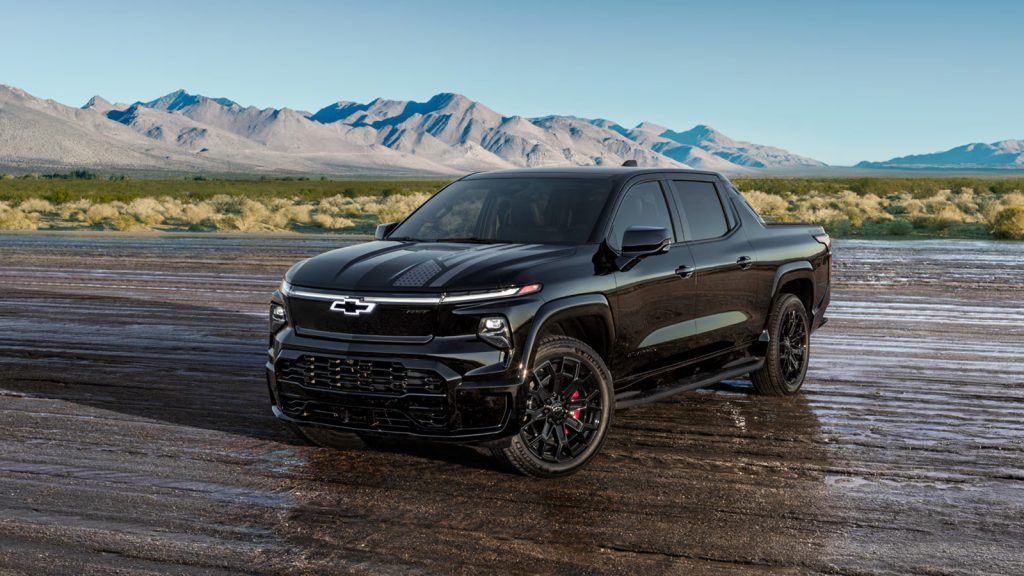
Electric pickup trucks are still a evolving segment, but early data indicates significant variance in how well these vehicles retain value over time. Chevrolet’s Silverado EV offers impressive range and power, yet its long-term financial trajectory lags behind its direct competition.
With a starting MSRP of $55,895, CarEdge estimates the Silverado EV retains 38.9% after five years, leaving it with a residual value around $21,743. Kelley Blue Book’s projections for higher trim levels are similarly low, forecasting just 35.5% retention on a $75,195 MSRP.
Competing electric trucks show noticeably stronger residual numbers. The GMC Sierra EV retains up to 60% according to CarEdge, the Tesla Cybertruck holds between 52% and 54%, and the Ford F-150 Lightning retains 44.3%. With an initial price point close to $50,000, the Lightning offers a far lower total dollar drop than the Chevy.
Chrysler Voyager
Minivans have seen a minor sales resurgence as practical family haulers, but non-hybrid entry-level models still suffer from poor long-term value retention. The Chrysler Voyager serves as the fleet and budget-oriented trim of the Chrysler minivan lineup, but its lower sticker price doesn’t protect it from steep depreciation.
CarEdge data indicates the Voyager retains roughly 36% of its original purchase price after five years. Its sister model, the Chrysler Pacifica, fares slightly better at 40.9% thanks to additional standard features and premium interior options, saving owners about $3,300 in resale value over the same ownership period.
The segment leaders hold value much better due to proven long-term reliability ratings:
- Toyota Sienna: Retains an industry-leading 62.4% after five years.
- Honda Odyssey: Retains a solid 56.8% over the same period.
Jaguar F-Pace
Drivers drawn to performance-oriented luxury SUVs often look at the Jaguar F-Pace for its engaging handling and distinctive styling. However, high maintenance costs and brand perception hit Jaguar models hard when they hit the second-hand market.
A 2026 Jaguar F-Pace retails for $58,375. CarEdge estimates it will keep only 34.6% of its price tag by year five (yielding around $20,197), while Kelley Blue Book projects an even lower retention rate of 29.9%. That represents a massive cash loss of over $38,000.
Competing European crossover options provide significantly better value retention in the midsize luxury category. The Mercedes-Benz GLC retains around 52% of its MSRP, while both the BMW X3 and Audi Q5 hold identical 45.9% residual rates. Choosing the F-Pace over the GLC results in over 50% greater financial depreciation over five years.
Frequently Asked Questions
Why do luxury cars depreciate faster than standard economy vehicles?
Luxury vehicles depreciate rapidly because out-of-warranty repair and maintenance costs are exceptionally high, which discourages second-hand buyers. Additionally, luxury buyers prioritize having the latest technology and styling, causing older luxury models to lose appeal quickly when updated versions hit the market.
Is buying a fast-depreciating vehicle smart on the used market?
Yes, purchasing a heavily depreciated vehicle as a pre-owned car can be an excellent financial strategy. Since the original owner absorbed the vast majority of the steep value drop, second-hand buyers can acquire luxury features, strong towing capacity, or high-performance powertrains for a fraction of the original sticker price.
What factors contribute most to a vehicle’s resale value?
Brand reliability ratings, vehicle segment popularity, total mileage, maintenance history, and local market demand are the primary drivers of resale value. Vehicles made by brands known for long-term durability, such as Toyota or Lexus, consistently outperform niche technology or complex luxury models in value retention.