
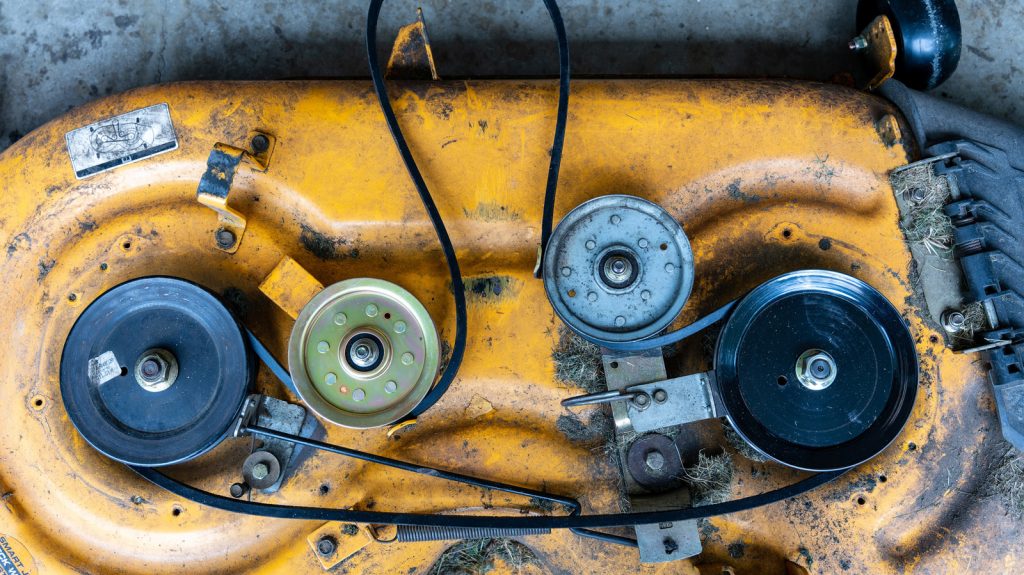
Few components take as much constant punishment as a lawn mower’s deck belt, which transfers direct engine or PTO pulley power straight to the cutting blades. Knowing when this critical part is nearing the end of its functional life keeps your equipment running smoothly and prevents unexpected breakdowns in the middle of a cut.
Residential mower deck belts generally last between 100 and 200 operational hours, translates roughly to three to five years of standard yard maintenance. Actual service life depends heavily on belt construction, deck alignment, terrain toughness, and routine care. This guide outlines baseline replacement schedules, visual warning signs of failure, and proactive steps to maximize belt performance.
Mower Belt Lifespan Expectations
Different belt setups experience varying degrees of friction, load, and thermal stress during operation. The table below outlines typical operating hours based on component design and usage intensity:
| Belt Application / Material | Average Lifespan (Hours) | Typical Operating Conditions |
|---|---|---|
| Standard Residential Deck Belt | 100 – 200 Hours | Normal residential lawn upkeep over 3–5 years |
| Spindle / Blade Drive Belt | 50 – 150 Hours | High heat exposure and intense friction load |
| Transmission Drive Belt | Up to 400 Hours | Less demanding propulsion duty under normal conditions |
| Heavy-Duty Aramid / Kevlar Belt | 300+ Hours | High heat resistance, steep hills, and thick grass |
Recognizing Signs of Mower Deck Belt Wear
A failing deck belt directly compromises your lawn mower’s cutting capability before it snaps entirely. Spotting subtle early warning signs allows you to swap out worn parts on your own schedule rather than dealing with mid-mow breakdowns.
- Uneven Cutting Performance: If your mower leaves ragged patches or uneven strands of grass, the belt may be slipping off the pulleys or losing tension under load.
- Jarring Noises: Squeal or harsh vibration suggests that components are misaligned or the belt material has stretched beyond tolerance.
- Visible Cracking and Fraying: Cracks along the belt wall, missing rubber chunks, or exposed cord backing signal imminent structural failure.
- Deck Misalignment: A tilted or uncalibrated mower deck puts uneven torque on the drive system, wearing down one edge of the belt prematurely.
How to Maximize Lawn Mower Belt Longevity
Adopting simple operational habits significantly slows down mechanical wear. Upgrading to higher-grade belt materials is another proven way to reduce how often you need to buy replacements.
Investing in heavy-duty aramid or Kevlar-reinforced belts provides far better resistance to internal friction and operating heat. Industry testing highlights that premium heat-resistant belts retain roughly 92 percent of their initial flexibility even after running continuously for 300 hours, making them economical over the long term.
You should also clear grass buildup beneath the mower deck after every mowing session. Clogged clippings create drag that forces the motor and drive pulleys to work much harder. Furthermore, take extra care when tackling steep inclines, thick weed patches, or overgrown turf, as aggressive cutting speeds under heavy load put extreme physical strain on the entire pulley system.
Frequently Asked Questions
How many years does a standard mower deck belt usually last?
For most residential homeowners mowing once a week during the growing season, a deck belt lasts between three and five years, or roughly 100 to 200 hours of active engine time.
What causes a lawn mower deck belt to snap prematurely?
Excessive heat buildup, heavy debris clogged around the pulleys, deck misalignment, and striking solid object like rocks or thick roots cause rapid wear and early breakage.
Are Kevlar mower belts worth the additional cost?
Yes. Kevlar and aramid-reinforced belts offer superior tensile strength and heat resistance compared to standard rubber options, providing significantly longer operational service under tough mowing conditions.